
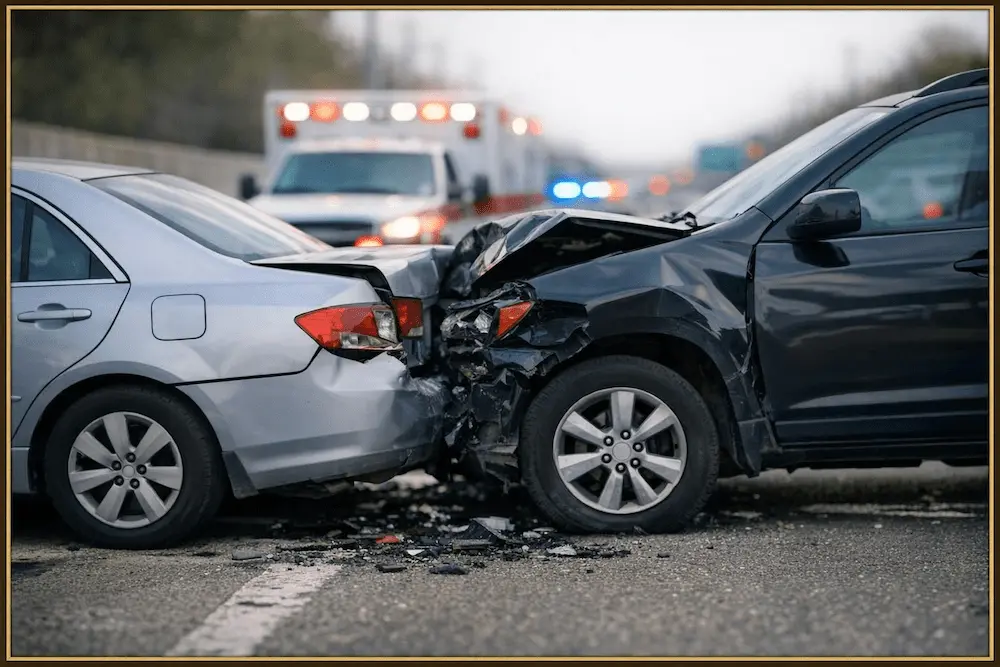
You can speak with experienced attorneys who have secured over $7.5 billion in negotiated settlements for injured clients by calling 314-963-9000 for a free consultation with no fees unless we win your case. Our team has handled thousands of rear-end collision claims throughout Missouri, developing specific strategies to counter insurance company defenses and prove fault even when the other driver claims you stopped short or contributed to the crash.
While many assume the rear driver is automatically at fault in these crashes, Missouri law recognizes that liability can be more complex, especially when brake checking, sudden stops, or chain reactions are involved.
The Most Common Type of Accident
According to NHTSA data (2019), rear-end collisions represented 32.5% of all crashes nationwide, making them the most common type of accident our clients face. More recent NHTSA Federal Register data (2022) shows this pattern continuing at 28.4% of all crashes, highlighting the critical need for experienced legal representation when these incidents occur.
Specialized Legal Experience
Rear-end collision cases present unique challenges that general personal injury attorneys may not fully appreciate. Our firm has recovered over $5 billion in negotiated settlements and verdicts for injury victims, bringing that same dedication and expertise to every rear-end collision case we handle. We understand the specific challenges these crashes present and have developed strategies to counter every common insurance company defense.
Understanding Rear-End Collision Liability in Missouri
Rear-end collision cases operate under a distinct legal framework that creates advantages for injured victims while requiring careful navigation of potential defenses. Missouri law establishes a rebuttable presumption that the following driver was negligent, though this presumption can be overcome with proper evidence and legal strategy that addresses the specific circumstances of your crash.
Reasonable Following Distance Under RSMo §304.017
Under Missouri Revised Statute §304.017, drivers must maintain a reasonable and prudent following distance based on speed, traffic, and road conditions—a duty that forms the foundation of most rear-end collision claims. This statutory requirement creates a clear legal standard against which we measure the rear driver’s conduct and establish liability.
Pure Comparative Fault Under Gustafson v. Benda
Because Missouri follows a pure comparative fault system established in Gustafson v. Benda, 661 S.W.2d 11 (Mo. banc 1983), you may recover compensation even if you share some responsibility for the crash, though your recovery will be reduced by your percentage of fault. This framework means that even if the insurance company argues you contributed to the collision by stopping suddenly or changing lanes, you may still be entitled to substantial compensation for your injuries.
Federal Regulations for Commercial Drivers
Federal regulations under 49 C.F.R. §392.80 and §392.82 prohibit commercial drivers from texting or using hand-held devices, creating additional grounds for liability in truck rear-end cases. The distinction between general negligence principles and rear-end collision doctrine becomes critical when multiple parties share fault or when commercial vehicles are involved, as federal regulations impose stricter standards on truck drivers operating in interstate commerce.
Common Causes of Rear-End Collisions in St. Louis
The factors that contribute to rear-end collisions in St. Louis reflect both universal driving hazards and location-specific traffic patterns that create dangerous conditions. Understanding these causes helps establish liability and counter insurance company attempts to shift blame to innocent victims.
Distracted Driving
Distracted driving remains the leading cause of rear-end collisions in St. Louis, particularly with the rise of smartphone use despite Missouri’s hands-free law that took effect August 28, 2023. While the new hands-free law under RSMo §304.822 strengthens claims against distracted drivers by creating a clear statutory violation, proving phone use at the time of impact requires swift action to preserve cell phone records and surveillance footage before they’re deleted or overwritten.
Following Distance Violations
Following distance violations account for 23% of rear-end crashes according to Missouri State Highway Patrol data (2023), often occurring when drivers fail to adjust their spacing for weather conditions or heavy traffic on routes like I-64 through Clayton and Chesterfield, where sudden slowdowns catch inattentive drivers by surprise. Weather conditions dramatically increase stopping distances, making inadequate following distance even more dangerous during St. Louis’s unpredictable weather patterns.
Speeding
Speeding compounds the danger of inadequate following distance, especially during St. Louis’s unpredictable weather patterns when stopping distances can double on wet roads or triple on ice. The combination of high speeds and sudden traffic slowdowns creates perfect conditions for rear-end collisions, particularly in construction zones along I-270 where lanes narrow and traffic patterns shift unexpectedly, leaving drivers insufficient time to react when the vehicle ahead brakes suddenly.
Impaired Driving
Impaired driving, whether from alcohol, drugs, or prescription medications, further reduces reaction times and judgment, leading to devastating high-speed rear-end impacts that cause severe injuries even when the front vehicle was stopped or moving slowly. The combination of impairment with other factors like speeding or following distance violations creates particularly dangerous conditions that result in serious multi-vehicle collisions.
Aggressive Driving & Road Rage
Aggressive driving behaviors like tailgating and road rage have increased throughout the St. Louis metro area, with drivers following dangerously close to intimidate or express frustration during congested commutes. These intentional acts of aggression not only establish clear liability but may also support claims for punitive damages when the rear driver’s conduct shows reckless disregard for safety rather than mere negligence.
Unique Rear-End Collision Scenarios and Fault Determination
Beyond straightforward rear-end impacts, certain collision scenarios present complex liability questions that demand careful investigation and strategic legal analysis. These situations often become battlegrounds where insurance companies attempt to shift fault away from their insureds.
Injuries Specific to Rear-End Collisions
⚖️ Understanding Injury Patterns in Rear-End Impacts
Whiplash Injuries: Whiplash remains the signature injury of rear-end collisions, affecting 83% of victims according to Insurance Institute for Highway Safety data (2022), though its delayed onset often allows insurance companies to dispute causation by arguing your symptoms developed from other activities after the crash. The sudden acceleration-deceleration forces unique to rear-end impacts cause the neck to snap forward and back, damaging soft tissues, ligaments, and cervical discs in ways that may not appear on initial X-rays but develop into chronic pain conditions requiring months or years of treatment, including physical therapy, chiropractic care, and sometimes surgical intervention when conservative treatment fails.
Because symptoms like headaches, dizziness, and cognitive difficulties may not manifest for days or weeks after the crash, immediate medical evaluation becomes crucial for documenting the connection between the collision and your injuries, even if you feel fine at the accident scene.
Lumbar Spine Injuries: Lumbar spine injuries occur when the force of rear impact compresses the lower back against the seat, causing herniated discs, compression fractures, and chronic pain that radiates down the legs and limits your ability to work, exercise, or perform daily activities. These injuries particularly affect drivers who were stopped at traffic lights or in congestion, as the unexpected impact provides no opportunity to brace or adjust posture before the collision transfers maximum force to the spine.
Traumatic Brain Injuries: Traumatic brain injuries can result even without direct head impact, as the brain moves within the skull during rapid acceleration, causing concussions that produce lasting cognitive and emotional effects often overlooked in initial emergency room evaluations that focus on visible injuries and acute pain complaints.
Psychological Trauma: The psychological trauma from rear-end collisions manifests as driving anxiety, hypervigilance, and post-traumatic stress that prevents victims from feeling safe in vehicles, particularly when stopped in traffic where they fear another impact from behind.
Seatbelt and Airbag Injuries: Seatbelt and airbag injuries, including chest contusions, rib fractures, and internal organ damage, represent the paradox of safety systems that prevent worse injuries while causing their own trauma during high-force impacts, though insurance companies often use the presence of these injuries to argue the collision was severe enough to cause your other complaints.
Documenting these varied injury patterns requires coordination with medical providers who understand rear-end collision mechanics and can explain how seemingly minor property damage can cause significant physical harm—testimony that becomes essential when insurers argue that low-speed impacts cannot cause the injuries you’re experiencing, which makes gathering the right evidence from the beginning absolutely critical.
Evidence You Need to Prove Your Rear-End Collision Claim
Building a successful rear-end collision claim requires assembling comprehensive evidence that establishes liability, documents your injuries, and counters predictable insurance company defenses. The strength of your evidence often determines whether you receive fair compensation or face a prolonged battle with adjusters.
How Insurance Companies Fight Rear-End Collision Claims
Insurance adjusters deploy predictable defense strategies against rear-end collision claims, using sophisticated tactics refined over decades to reduce payouts even in cases with clear liability. Understanding these strategies helps you avoid common pitfalls that can damage your claim’s value.
⚠️ The “Sudden Stop” Argument
The “sudden stop” argument attempts to shift blame by claiming you stopped unexpectedly without valid reason, suggesting you violated traffic laws or created an emergency that made the collision unavoidable for the following driver. Adjusters scrutinize your vehicle for evidence of non-functioning brake lights, argue that you changed lanes abruptly without signaling, or claim that you should have pulled forward to create more space.
⚠️ The “Low-Speed Impact” Defense
The “low-speed impact” defense has become increasingly common, with adjusters arguing that collisions under 10 mph cannot cause significant injuries despite extensive medical literature proving otherwise and biomechanical experts who regularly testify that whiplash and soft tissue injuries occur at speeds as low as 5 mph.
⚠️ Surveillance and Monitoring
Surveillance has evolved into a standard insurance company weapon, with investigators monitoring your social media posts for photos showing physical activity, conducting video surveillance of your daily activities to catch you lifting groceries or playing with children, and searching for any evidence that contradicts your injury claims.
⚠️ Quick Settlement Pressure
Quick settlement pressure begins immediately after the crash, with adjusters offering lowball amounts before you understand the full extent of your injuries, often accompanied by “final offer” threats designed to frighten unrepresented victims into accepting inadequate compensation that fails to cover future medical needs.
⚡
Pre-Existing Injury Arguments:
The pre-existing injury argument allows insurers to acknowledge your current pain while denying their insured caused it, requiring detailed medical history review and expert testimony to prove the rear-end collision aggravated or activated dormant conditions that weren’t causing symptoms before the crash. When dealing with whiplash and soft tissue injuries that don’t appear on standard imaging, insurance companies dismiss your pain as exaggerated or psychological, ignoring the documented reality that these injuries cause genuine, lasting impairment even without visible damage on X-rays or CT scans.
Understanding Compensation Available in St. Louis Rear-End Collision Cases
Understanding the full scope of available compensation helps you evaluate settlement offers and ensures you pursue every category of damages Missouri law allows. Rear-end collision victims may be entitled to both economic and non-economic damages that reflect the true cost of their injuries.
⚖️ Economic Damages
- Immediate medical expenses from emergency treatment
- Ongoing costs for physical therapy and chiropractic care
- Future medical needs for long-term management or surgery
- Lost wages when injuries prevent working
- Diminished earning capacity for chronic pain or TBI effects
- Vehicle repair costs or total loss value
- Rental car expenses and out-of-pocket costs
⚖️ Non-Economic Damages
- Pain and suffering compensation
- Loss of enjoyment of life
- Strain on relationships from chronic pain
- Emotional distress and driving anxiety
- Post-traumatic stress from the collision
Missouri jury verdict data (2023) shows average rear-end collision settlements ranging from $15,000 to $75,000 for moderate injuries, though cases involving herniated discs, surgery, or permanent impairment can result in significantly higher recoveries.
— Missouri Jury Verdict Data, 2023
⚖️
Critical Deadline – Statute of Limitations:
Missouri’s statute of limitations provides five years from the date of injury to file a personal injury lawsuit under RSMo §516.120, though this lengthy deadline shouldn’t encourage delay since evidence deteriorates and witnesses become unavailable over time. Insurance claims have shorter deadlines specified in your policy, making prompt legal consultation essential to preserve all options.
Steps to Take After a Rear-End Collision in St. Louis
The actions you take in the hours and days following a rear-end collision can significantly impact your ability to recover fair compensation. Knowing what to do protects both your health and your legal rights.
Call 911 & Document the Scene
Immediate actions after a rear-end collision can determine the success of your claim, starting with calling 911 to document the crash officially and ensure medical evaluation even if adrenaline masks your injuries initially. While safety comes first, photographing the specific rear-end damage pattern, including close-ups of bumper impacts, trunk damage, and deployed airbags, creates evidence that cannot be disputed later when memories fade and vehicles are repaired.
Exchange Information Carefully
Exchange information with all involved drivers but avoid discussing fault or apologizing, as even saying “I’m sorry this happened” can be twisted into an admission of liability by insurance companies seeking to reduce their payout. Never sign anything at the scene except the police report, as insurance companies will use any written statement you make to minimize their liability and reduce your compensation.
Seek Immediate Medical Evaluation
Medical evaluation within 24 hours proves crucial for rear-end collision victims because whiplash and other soft tissue injuries often don’t manifest symptoms immediately, yet delays in treatment become ammunition for insurance company arguments that you weren’t really hurt. Explain the rear-end collision mechanism to every medical provider, ensuring they document how the impact caused your specific injuries, and follow treatment recommendations consistently.
Contact an Attorney Before Giving Statements
Contacting an experienced car accident attorney before giving any recorded statement to insurance companies protects you from trained adjusters who know how to phrase questions that damage your claim by getting you to minimize injuries or accept partial fault. Early legal representation matters because evidence disappears quickly—surveillance footage gets overwritten, witnesses become harder to locate, and vehicle data may be lost if not properly preserved.
Document Your Recovery & Injuries
Document your injuries and recovery through a daily journal noting pain levels, limitations, missed activities, and emotional effects, creating contemporaneous evidence that carries more weight than recollections months later during depositions. Preserve all evidence including your damaged vehicle if possible, medical records and bills, witness contact information, and any surveillance footage you can obtain.
Frequently Asked Questions About Rear-End Collisions in St. Louis
Take Action After Your Rear-End Collision
When you’re facing mounting medical bills, lost wages, and insurance company pressure after a rear-end collision, our experienced attorneys provide the aggressive representation needed to maximize your recovery while you focus on healing. Our firm has recovered over $5 billion in negotiated settlements and verdicts for injury victims, bringing that same dedication and expertise to every rear-end collision case we handle.
✓ No Fee Unless We Win
✓ Available 24/7
✓ $5B+ Recovered