
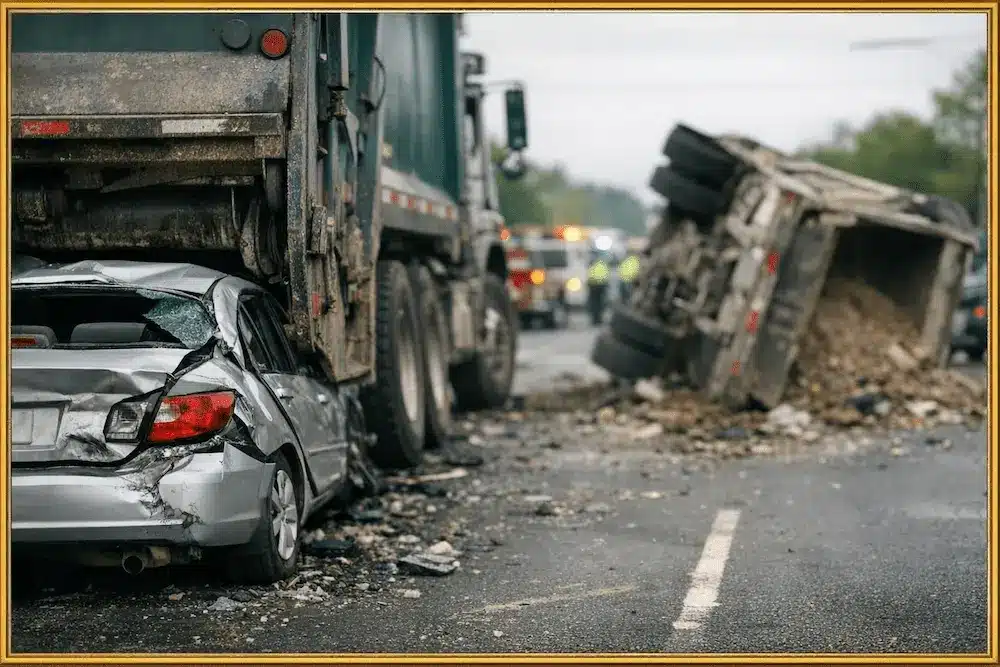
You can speak with experienced attorneys who have secured over $5 billion in negotiated settlements for injured clients by calling (314) 408-6136 for a free consultation with no fees unless we win your case. If you’ve been injured in a garbage or dump truck accident, you’re likely facing mounting medical bills, lost wages, and pressure from insurance companies to settle quickly.
While we handle all types of truck accident cases, garbage and dump trucks present unique challenges that require specialized legal knowledge. These vehicles operate differently than other commercial trucks because they frequently back through residential neighborhoods, make sudden stops, and carry heavy hydraulic equipment that can fail catastrophically. Our experienced attorneys understand these distinctions and know how to build strong cases for victims of refuse truck accidents.
Understanding Operations and Hazards
The unique operational characteristics of garbage and dump trucks create specific risks that other commercial vehicles don’t present. Understanding these hazards is crucial to building a strong injury claim and establishing liability for your injuries. One significant concern that arises in this context is the frequency and impact of tanker truck accident statistics in California. These incidents can often lead to severe injuries and extensive property damage, highlighting the need for rigorous safety measures. Moreover, understanding patterns in these statistics can assist victims in navigating their legal options more effectively.
Why Specialized Legal Representation Matters
Garbage truck accident cases demand attorneys with specific knowledge of waste management operations and the complex liability issues these accidents present. The intersection of municipal law, federal trucking regulations, and industry-specific safety standards creates legal complexity beyond typical vehicle accidents.
Types of Refuse Collection Vehicles
Not all garbage trucks operate the same way, and each type presents specific dangers to motorists and pedestrians. Understanding these distinctions is critical for establishing how the accident occurred and proving liability. The complexities of liability in tow truck accidents can further complicate the determination of fault. When a tow truck is involved, factors such as proper signaling, equipment used, and the surrounding environment play significant roles. Adequate training and adherence to safety regulations are essential in minimizing risks associated with these heavy vehicles. Inexperienced truck drivers and accidents can lead to catastrophic outcomes, as their lack of experience may result in poor decision-making in critical moments. This highlights the necessity for rigorous training programs and ongoing education focused on safety and operational protocols. Additionally, the impact of these accidents extends beyond the immediate scene, affecting families and communities as they grapple with the consequences of such incidents.
Rear Loader Compactor Trucks
The most common in residential St. Louis neighborhoods, rear loader compactor trucks require workers to stand on platforms while the vehicle moves between stops, creating massive blind spots behind them that frequently lead to backing accidents without adequate visibility.
Front-End Loader Trucks
Service commercial properties and apartment complexes throughout St. Louis County using powerful hydraulic arms to lift heavy dumpsters overhead. These operations create risks of mechanical failure and falling debris that can strike nearby vehicles or pedestrians.
Automated Side Loaders & Roll-Off Trucks
Automated side loaders operate with just one driver who controls a mechanical arm from inside the cab, forcing that driver to divide attention between driving and operating complex equipment. Roll-off trucks transport large construction debris containers and have high centers of gravity that make them prone to tipping, especially when navigating St. Louis’s hilly terrain.
Unique Equipment and Mechanical Systems
Hydraulic Systems and Failure Risks
The hydraulic systems powering garbage trucks operate under extreme pressure and carry significant failure risks that don’t exist in standard commercial vehicles. Hydraulic lift mechanisms can malfunction suddenly, dropping heavy loads or striking nearby vehicles and pedestrians, and these systems require constant maintenance because even small leaks can lead to catastrophic failures.
Compactor and packer blade mechanisms inside garbage trucks exert thousands of pounds of pressure to compress waste. When these systems fail, they can cause fires from friction or hydraulic fluid ignition—a risk highlighted by recent fire incidents involving St. Louis refuse vehicles.
The hopper systems that receive trash have multiple pinch points and moving parts that can fail without warning, creating additional hazards for anyone nearby. Automated arm systems on modern refuse trucks add another layer of mechanical complexity because these computer-controlled arms can malfunction, swinging unexpectedly into traffic or dropping containers.
The weight distribution in garbage trucks changes constantly as trash is loaded and compacted, affecting vehicle stability and braking distance in ways that make these vehicles particularly unpredictable. St. Louis City’s refuse fleet includes various equipment configurations, each with specific maintenance requirements that, when neglected, create serious safety hazards.
Common Causes of Garbage & Dump Truck Accidents in St. Louis
Understanding how and why refuse truck accidents occur helps establish liability and strengthen injury claims. These accidents often result from a combination of factors unique to waste collection operations that create perfect storm conditions for serious crashes.
Backing and Reversing Accidents
Garbage trucks make hundreds of stops daily, reversing frequently on narrow residential streets throughout St. Louis neighborhoods where visibility is already limited. According to the Missouri State Highway Patrol’s 2022 crash data, commercial trucks were involved in 15,005 crashes statewide, with backing accidents representing a significant portion of urban collisions. Despite backup cameras and warning alarms, these massive vehicles have extensive blind zones that make safe reversing extremely difficult, particularly in older neighborhoods.
Children playing near the street and cyclists using bike lanes face particular danger from reversing garbage trucks because drivers may become complacent about checking blind spots after making hundreds of similar stops. Many waste management companies fail to provide adequate spotter procedures, leaving drivers to navigate tight spaces alone in neighborhoods like South City and University City, where narrow streets and street parking create frequent backing accidents involving refuse vehicles.
Blind Spot and Visibility Issues
Garbage trucks have blind spots extending several feet on all sides, far larger than typical passenger vehicles, and the high cab position that helps drivers see over traffic also creates massive blind zones directly in front of and beside the truck. During residential collection, drivers must constantly check route sheets and navigation systems, dividing their attention from the road at critical moments.
Equipment mounted on refuse trucks—including mirrors, hydraulic arms, and hopper mechanisms—can obstruct driver views when it matters most. Right-side blind spots are particularly dangerous during curbside collection when workers, pedestrians, and cyclists may be present, contributing to intersection accidents at stop signs where drivers cannot see crossing traffic or pedestrians.
Equipment Failure and Mechanical Defects
The constant operation of hydraulic systems in garbage trucks creates numerous failure points throughout the vehicle. Hydraulic fluid leaks can cause fires, as seen in recent St. Louis refuse truck incidents reported by local news, while brake systems endure extreme stress from the constant stopping required on collection routes, leading to premature wear and potential failure.
According to FMCSA data, dump trucks were involved in approximately 8% of fatal large truck crashes nationally, with mechanical failures being a contributing factor in many cases. Tire blowouts occur when trucks exceed weight limits or when maintenance is deferred, and compactor blade malfunctions can cause sudden vehicle shifts or fires from overheated mechanical components. Additionally, automated arm system failures may result in dropped containers or unexpected arm movements into traffic lanes.
Debris and Load Spillage Accidents
Unsecured loads falling from garbage and dump trucks create immediate hazards for following vehicles on St. Louis highways and streets. Liquid waste spillage makes road surfaces slippery, particularly dangerous during St. Louis’s frequent rain, while debris falling during the compaction process can strike other vehicles or create obstacles in traffic lanes. When containers or dumpsters aren’t properly secured, they can shift or fall during transport, causing serious accidents that affect multiple vehicles.
Unique Liability Issues in Garbage & Dump Truck Accidents
Determining liability in refuse truck accidents requires understanding the complex relationships between government entities, private companies, and various contractors involved in waste management operations. These cases often involve multiple liable parties and different legal standards than typical vehicle accidents.
Evidence Critical to Garbage & Dump Truck Accident Cases
Building a strong refuse truck accident case requires gathering specialized evidence unique to waste management operations that proves negligence and establishes the full extent of your damages.
Specialized Evidence in Refuse Truck Cases
-
✓
Route sheets and collection schedules – Prove where trucks should have been and when, establishing whether drivers were rushing or behind schedule
-
✓
GPS and telematics data – Modern refuse trucks provide precise location, speed, and operational data at the time of impact
-
✓
Camera footage – Many trucks have multiple cameras that may have captured the accident, though this footage must be preserved quickly before automatic deletion
-
✓
Hydraulic system maintenance logs – Reveal whether required inspections and repairs were performed
-
✓
Compactor inspection records – Show compliance with safety standards and identify potential mechanical issues
-
✓
Driver training records – Especially for backing procedures and equipment operation, demonstrate whether operators were properly qualified
-
✓
Pre-trip inspection reports – Required by federal regulations, may reveal known problems that weren’t addressed before the accident
-
✓
Weight tickets and load documentation – Prove whether trucks exceeded safe operating limits
-
✓
Municipal contracts – Often specify safety requirements and operational standards that, if violated, establish negligence
-
✓
Previous incident reports – Involving the same truck, driver, or company show patterns of unsafe operation that strengthen your case
⚡
Important:
Under federal regulations, when applicable, commercial vehicles must maintain specific records that become crucial evidence. The Federal Motor Carrier Safety Administration requires maintenance records, driver logs, and inspection reports that can establish liability patterns and prove systematic safety violations.
Injuries Common in Garbage & Dump Truck Accidents
The size, weight, and operational characteristics of refuse trucks often cause severe injuries that require extensive medical treatment and long-term care, fundamentally changing victims’ lives.
Crushing Injuries
Crushing injuries frequently occur in backing accidents, particularly when pedestrians or cyclists cannot escape the reversing vehicle’s path, and these injuries often result in permanent disability or death. The Missouri State Highway Patrol reported that commercial truck accidents resulted in numerous pedestrian fatalities statewide, with refuse trucks contributing to urban pedestrian accidents.
Cyclist and Pedestrian Injuries
Cyclists face extreme danger when garbage trucks operate in bike lanes during collection because the combination of limited visibility and frequent stops creates deadly conditions. Impact injuries range from broken bones to traumatic brain injuries, often requiring treatment at facilities like Barnes-Jewish Hospital or SSM Health.
Hydraulic Injection and Burn Injuries
Workers and bystanders near malfunctioning hydraulic equipment may suffer injection injuries when high-pressure fluid penetrates skin, while burns from hydraulic fluid fires or hot mechanical components require specialized treatment and often result in permanent scarring. Debris strikes from falling loads or equipment failures can cause head injuries, lacerations, and internal trauma requiring emergency surgery.
Intersection Collision Injuries
Intersection collisions between garbage trucks and passenger vehicles often result in catastrophic injuries due to the massive weight difference. Occupants of smaller vehicles may suffer spinal cord injuries, internal organ damage, and multiple fractures requiring extensive surgical intervention and rehabilitation that can last months or years.
Compensation & Legal Deadlines in Refuse Truck Cases
Types of Compensation Available
Victims of garbage and dump truck accidents may be entitled to various forms of compensation, though the amount and types available depend on whether the at-fault party is a government entity or private company.
⚖️ Economic Damages
- Medical expenses for emergency treatment, surgeries, rehabilitation, and future care needs
- Lost wages for time missed from work during recovery
- Future earning capacity losses when injuries prevent returning to previous employment
- Property damage for vehicle repairs or replacement costs
❤️ Non-Economic Damages
- Pain and suffering compensation
- Emotional distress and loss of enjoyment of life
- Disfigurement and scarring from burns or crushing injuries
- Loss of consortium claims for damage to marital relationship
⚖️
Punitive Damages:
When private waste haulers are liable, punitive damages may be available for egregious negligence or reckless conduct. However, under Missouri law (RSMo §537.610), public entities cannot be assessed punitive damages, and total damages are subject to statutory caps that limit recovery even in severe injury cases.
⚖️ Comparative Negligence
Missouri’s pure comparative negligence rule, established in Gustafson v. Benda (1983), allows recovery even if you share some responsibility for the accident, though your compensation is reduced by your percentage of fault.
Critical Deadlines
⚖️
Critical: Evidence Preservation
Truck data recorders and surveillance footage may be deleted within days. Insurance coverage varies significantly between municipal and private operators, with federal regulations requiring minimum insurance levels for commercial vehicles in interstate commerce, though many trucks carry higher limits. Contact an attorney immediately to preserve crucial evidence.
Frequently Asked Questions About Garbage & Dump Truck Accidents
Contact Our St. Louis Garbage & Dump Truck Accident Lawyers
Time is critical in garbage and dump truck accident cases, especially when municipal vehicles are involved. Government claim deadlines can be as short as 90 days, and crucial evidence like truck data recordings and surveillance footage may be deleted within days. Don’t let important deadlines pass while dealing with injuries and insurance companies.
At OnderLaw, we offer free consultations to evaluate your case and explain your legal options. You pay no fees unless we successfully recover compensation for you, and our experienced attorneys understand the unique challenges of refuse truck accidents, from municipal liability limits to complex equipment failures. We have the resources to investigate thoroughly, hire necessary experts, and fight for maximum compensation.
✓ No Fee Unless We Win
✓ Available 24/7
✓ $5B+ Recovered