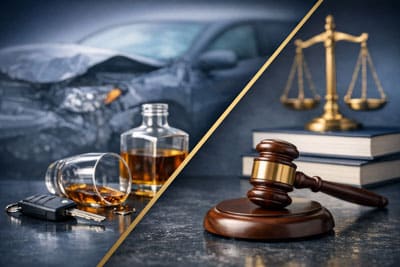
You can speak with experienced attorneys who have secured over $7.5 billion in negotiated settlements for injured clients by calling 314-963-9000 for a free consultation with no fees unless we win your case. Our team understands both the criminal and civil aspects of drunk driving cases, coordinating with prosecutors while building your independent claim for compensation that goes far beyond basic insurance settlements.
13,384
Alcohol-Impaired Driving Deaths (2021)
31%
Of All Traffic Fatalities
5 Years
Statute of Limitations (Missouri)
⚠️
The Scope of Drunk Driving Tragedies
Unlike typical car accidents where negligence might involve a momentary lapse in judgment, drunk driving crashes stem from a conscious choice to endanger innocent lives. According to the National Highway Traffic Safety Administration, 13,384 people died in alcohol-impaired driving crashes in 2021, representing 31% of all traffic fatalities nationwide.
⚖️
Missouri’s Enhanced Legal Remedies
Missouri law recognizes the distinction between ordinary negligence and deliberate drunk driving through enhanced legal remedies that may include punitive damages designed to punish egregious conduct, dram shop claims against establishments that overserved the driver, and criminal restitution that runs parallel to your civil recovery.
Understanding Your Rights After a Drunk Driving Accident
When a drunk driver destroys your sense of safety and physical wellbeing, you have rights that extend beyond watching the criminal justice system potentially give them a slap on the wrist. Understanding these rights early helps you protect your interests while evidence is still fresh and witnesses’ memories remain clear.
⚖️
Criminal and Civil Pathways
Missouri law provides two distinct pathways for justice: the state’s criminal prosecution of the drunk driver and your civil claim for damages, and while these proceedings run on parallel tracks, they serve fundamentally different purposes. The criminal case focuses on punishment through fines, license suspension, and possible jail time, but it does nothing to address your medical bills, lost wages, or the physical and emotional trauma you’re enduring. Your civil claim operates independently of whether prosecutors file charges or secure a conviction, though a guilty plea or conviction certainly strengthens your case by establishing what courts call negligence per se—automatic proof that the driver breached their duty of care.
⏰
Preserving Critical Evidence
Because drunk driving cases involve time-sensitive evidence like surveillance footage from bars, credit card receipts showing alcohol purchases, and witness memories of the driver’s visible intoxication, preserving this evidence immediately can mean the difference between standard compensation and the enhanced damages these cases may support. The drunk driver’s insurance company will move quickly to minimize their exposure, often approaching victims within days of the accident with lowball settlement offers that don’t account for punitive damages or potential third-party liability.
⚖️️
Participating in Criminal Proceedings
As a victim, you have the right to participate in the criminal proceedings through victim impact statements, which can provide powerful evidence for your civil case while ensuring the court understands the full scope of harm caused. This dual-track approach to justice means you need attorneys who understand how to leverage criminal proceedings to strengthen your civil claim while protecting your interests in both arenas. Experienced legal counsel can help you navigate both proceedings before accepting any settlement or making statements to insurance adjusters, preserving all your options for maximum recovery.
Missouri DUI Laws and How They Strengthen Your Claim
Missouri’s drunk driving statutes create a framework of accountability that transforms what might otherwise be a complex negligence case into a clear-cut claim for compensation. These laws establish bright-line rules that eliminate many of the usual debates about fault and liability.
Per Se Violation and Negligence Per Se
Under Missouri law (RSMo § 577.010), any driver operating a vehicle with a blood alcohol content of 0.08% or higher commits a per se violation, meaning they’re automatically considered intoxicated regardless of their actual driving behavior. For commercial drivers operating trucks or buses, the threshold drops to just 0.04% BAC under federal regulations (49 C.F.R. § 392.5, current as of 2024), reflecting the heightened danger these vehicles pose, while drivers under 21 face zero-tolerance policies that make any detectable alcohol a violation. These bright-line rules eliminate the usual debates about whether someone was driving carelessly, because driving with an illegal BAC level constitutes negligence per se—a legal doctrine that means breaking the safety law automatically establishes the breach of duty element in your personal injury claim.
Enhanced Criminal Charges Supporting Punitive Damages
When prosecutors charge a drunk driver with aggravated offenses like vehicular assault for causing serious injuries or vehicular manslaughter for fatal crashes, these enhanced criminal charges signal to insurance companies and juries that this wasn’t just an accident but a predictable consequence of criminal behavior. The distinction matters enormously for your civil case, as Missouri courts have consistently held that criminal conduct may support awards of punitive damages designed to punish the wrongdoer and deter similar behavior. Beyond the basic DUI statutes, Missouri’s implied consent law (RSMo § 577.041) means that anyone who refuses a breathalyzer or blood test faces automatic license revocation, and that refusal becomes powerful evidence of consciousness of guilt in your civil case.
Prior Convictions and Aggravating Factors
If the drunk driver had prior DUI convictions, was driving on a suspended license from a previous drunk driving offense, or was violating probation terms, these aggravating factors strengthen arguments for maximum compensation. The interplay between criminal charges and civil liability creates leverage in settlement negotiations, as drunk drivers and their insurance companies know that a criminal conviction makes a civil jury trial particularly dangerous for them.
Evidence Critical to Drunk Driving Accident Cases
Building a compelling drunk driving injury claim requires gathering evidence that goes far beyond the typical accident documentation, because these cases hinge on proving both the intoxication and its role in causing your injuries. The strength of your case often depends on how quickly you can preserve evidence that might otherwise disappear within days or weeks of the crash.
- ✓
Police Report Documentation – The police report serves as the foundation, particularly when it includes the officer’s observations of bloodshot eyes, slurred speech, the odor of alcohol, failed field sobriety tests, and any admissions the driver made about drinking. Chemical test results showing BAC levels provide objective proof of intoxication, and when the driver’s BAC significantly exceeds the legal limit—say 0.15% or higher—it demonstrates a level of impairment that may make punitive damages almost certain.
- ✓
Bar and Establishment Records – Because drunk drivers often come from somewhere before getting behind the wheel, investigating their activities in the hours before the crash can uncover crucial third-party liability through what Missouri law calls dram shop claims against bars and restaurants. Bar receipts, restaurant checks, and credit card records showing alcohol purchases establish a timeline of consumption, while surveillance footage from establishments can capture the driver’s visible intoxication and potentially show staff continuing to serve them despite obvious impairment.
- ✓
Witness Testimony and Observations – Witness statements from other bar patrons, servers, or bartenders who observed the driver’s condition become critical for dram shop claims, as Missouri law (RSMo § 537.053) requires clear and convincing evidence that the establishment knowingly served someone who was visibly intoxicated.
- ✓
Digital and Social Media Evidence – Social media has become an unexpected goldmine of evidence in drunk driving cases, as defendants often post photos or comments about their drinking activities before crashes, and these digital admissions can devastate their defense.
- ✓
Cell Phone and Communication Records – Obtaining the drunk driver’s cell phone records might reveal texts about being too drunk to drive or calls attempting to find a ride, all of which demonstrate awareness of impairment and strengthen your claim for enhanced damages. Your attorney should immediately send preservation letters to bars, restaurants, and social venues demanding they maintain all video footage, receipts, and records, as many establishments routinely delete surveillance footage after 30 days.
- ✓
Expert Accident Reconstruction – The technical aspects of accident reconstruction take on added importance in drunk driving cases, as experts can demonstrate how the impaired driver’s delayed reaction times, erratic speed changes, or failure to brake contributed to the crash severity, countering common defense arguments that the accident would have happened regardless of intoxication.
Pursuing Punitive Damages in DUI Accident Cases
While standard personal injury cases focus on compensatory damages to make you whole, drunk driving cases open the door to punitive damages designed to punish egregious conduct and send a message that society won’t tolerate such reckless behavior. These enhanced damages may be available when the evidence shows the defendant acted with complete indifference to or conscious disregard for the safety of others.
⚡
Important:
Missouri law allows punitive damages when defendants act with complete indifference to or conscious disregard for the safety of others, and choosing to drive while intoxicated may fit this standard depending on the specific circumstances. However, recent changes to Missouri law (RSMo § 510.261, effective 2020) require your attorney to first demonstrate clear and convincing evidence to the court before even being allowed to request punitive damages in the lawsuit.
This procedural hurdle means your legal team must build a compelling case during initial discovery, gathering evidence of the driver’s extreme intoxication, any prior DUI history, whether they were driving on a suspended license, or other aggravating factors that demonstrate a pattern of dangerous behavior.
Courts consider factors like the driver’s BAC level at the time of the crash, with levels above 0.15% often supporting substantial punitive awards, while multiple prior DUI convictions can lead to punitive damages that may dwarf the compensatory award. Missouri doesn’t cap punitive damages in drunk driving cases, unlike some states, though any punitive award requires the defendant to pay 50% to the state’s tort victims’ compensation fund under current law.
The threat of punitive damages fundamentally changes settlement dynamics, because while compensatory damages are typically covered by insurance, punitive damages usually aren’t insurable as a matter of public policy, meaning the drunk driver faces personal financial exposure beyond their insurance limits. This dynamic creates a powerful incentive to settle for maximum policy limits rather than risk a trial where a jury might award significant punitive damages that the defendant would have to pay personally.
Experienced attorneys may be able to leverage this exposure during negotiations, particularly when the evidence shows egregious conduct like extremely high BAC levels, fleeing the scene, or driving with children in the vehicle while intoxicated, all of which may support substantial punitive awards if the case proceeds to trial.
Dram Shop Liability and Commercial Driver DUI
Beyond the drunk driver themselves, Missouri law creates pathways to hold establishments and employers accountable for their role in drunk driving tragedies.
Dram Shop Liability: Holding Bars and Restaurants Accountable
When bars, restaurants, or liquor stores contribute to drunk driving tragedies by overserving visibly intoxicated patrons or selling alcohol to minors, Missouri’s dram shop law (RSMo § 537.053, effective August 28, 2002) creates a path to hold these businesses accountable for their role in your injuries. These claims recognize that establishments serving alcohol have a responsibility to monitor patron consumption and refuse service when appropriate.
Unlike claims against the drunk driver which rely on ordinary negligence standards, dram shop claims require clear and convincing evidence—a higher burden of proof that demands thorough investigation and compelling evidence that the establishment knowingly served alcohol to someone showing clear signs of intoxication. This might include slurred speech, difficulty walking, bloodshot eyes, strong odor of alcohol, or behavior that would alert any reasonable server that the person had consumed too much.
The challenge in dram shop cases lies in proving what the establishment’s staff knew or should have known about the patron’s condition, which is why immediate investigation becomes critical before surveillance footage disappears and witnesses’ memories fade. Your attorney must establish not just that the driver was intoxicated at the time of the crash, but that they were visibly intoxicated when the establishment last served them, which often requires expert testimony about alcohol absorption rates and retrograde extrapolation to determine the driver’s likely condition at various points during their drinking session.
Missouri law provides an important exception for minors: if an establishment serves someone under 21, they may face strict liability for resulting injuries regardless of whether the minor appeared intoxicated.
Successful dram shop claims can significantly increase your total recovery, as bars and restaurants typically carry substantial liability insurance policies, and their commercial insurance often provides coverage well beyond the drunk driver’s personal auto policy limits. These claims also serve a crucial public safety function by creating financial incentives for establishments to train staff properly, monitor patron consumption, and refuse service when appropriate. The prospect of dram shop liability often brings additional parties to the settlement table, each with their own insurance coverage and desire to avoid the publicity of a trial highlighting their role in a drunk driving tragedy.
Commercial Driver DUI Accidents
When commercial truck drivers, bus operators, or delivery drivers choose to drink and drive, the consequences multiply exponentially due to the massive size and weight of their vehicles, and federal regulations recognize this heightened danger through stricter standards and enhanced liability. These cases often involve multiple defendants and complex insurance coverage issues that require experienced legal guidance.
Commercial drivers face a 0.04% BAC limit—half the standard threshold—under federal regulations (49 C.F.R. § 392.5, current as of 2024), and many companies maintain zero-tolerance policies that terminate drivers for any alcohol use while operating company vehicles. These stricter standards mean that a commercial driver might face criminal charges and civil liability even when their BAC would be legal for regular motorists.
Beyond the driver’s individual liability, trucking companies and other commercial employers may face vicarious liability for their employee’s drunk driving under the legal doctrine of respondeat superior, especially when the driver was on duty, making deliveries, or otherwise acting within the scope of employment.
Federal Motor Carrier Safety Administration regulations require trucking companies to maintain comprehensive drug and alcohol testing programs, including pre-employment screening, random testing, and mandatory post-accident testing, and failure to follow these protocols can establish independent negligence by the employer. When investigation reveals that a company ignored previous violations, failed to check driving records, or allowed a driver with alcohol problems to keep driving, the employer’s negligence may support substantial punitive damages beyond those available against the driver.
The insurance dynamics in commercial vehicle cases also differ dramatically, as federal law requires much higher minimum coverage—$750,000 for general freight and up to $5 million for hazardous materials—providing greater resources for compensation when catastrophic injuries occur. These higher policy limits, combined with the trucking company’s desire to protect its reputation and federal operating authority, often lead to more substantial settlements than typical drunk driving cases. Therefore, identifying all potentially liable parties early in the investigation becomes crucial to maximizing your recovery in commercial vehicle drunk driving cases.
The Criminal Case and Your Civil Claim
Understanding how criminal DUI proceedings interact with your civil claim helps maximize your recovery while avoiding pitfalls that could compromise either case. These parallel proceedings serve different purposes but can significantly influence each other in ways that benefit your overall pursuit of justice.
Although criminal prosecutors must prove guilt beyond a reasonable doubt—a much higher standard than the preponderance of evidence required in civil cases—a criminal conviction or guilty plea becomes powerful evidence that essentially guarantees liability in your civil claim. The criminal case timeline typically moves faster than civil proceedings, with arraignments, preliminary hearings, and potential plea negotiations happening within months while your civil case may take a year or more to resolve.
Your participation in the criminal case through victim impact statements serves multiple purposes: it ensures the court understands the full scope of harm for sentencing purposes, creates a record of your injuries and suffering that can be used in the civil case, and may result in restitution orders that provide immediate financial relief while your civil case proceeds. However, restitution ordered in criminal court typically covers only easily documented economic losses like medical bills and property damage, not the full spectrum of damages available in civil court including pain and suffering, loss of enjoyment of life, and punitive damages. Any restitution received gets credited against your civil recovery to prevent double recovery, but pursuing both avenues ensures maximum compensation.
Coordination between criminal and civil proceedings requires careful strategy, as statements made in one forum can affect the other, and your civil attorney should communicate with prosecutors to align strategies while protecting your interests. For instance, if prosecutors offer the drunk driver a plea deal, your attorney might provide input about ensuring the plea includes admissions helpful to your civil case rather than allowing vague language that leaves liability questions open. The criminal case also provides discovery opportunities, as police reports, blood test results, and witness statements gathered for prosecution become available for your civil case without the expense of independent investigation, allowing your attorney to build a stronger civil claim more efficiently.
Insurance Challenges in Drunk Driving Cases
Insurance companies treat drunk driving claims differently than standard accidents, often employing aggressive tactics to minimize payouts despite their insured’s criminal conduct, and understanding these strategies helps protect your rights to full compensation. These cases present unique coverage issues that require experienced legal guidance to navigate successfully.
Many policies contain exclusions for intentional acts or criminal behavior, leading insurers to argue they shouldn’t have to cover damages from drunk driving, though Missouri courts generally reject these arguments and require coverage for victims regardless of policy language attempting to exclude criminal acts. The insurer might also claim their duty to defend ends with a criminal conviction, but Missouri law typically requires them to provide coverage up to policy limits for compensatory damages even when their insured committed a crime.
When damages exceed the drunk driver’s policy limits—a common situation given Missouri’s minimum coverage of just $25,000 per person (Missouri Department of Insurance, 2024)—your attorney must explore every avenue for additional recovery including your own uninsured/underinsured motorist coverage, umbrella policies, and potential bad faith claims against insurers who unreasonably refuse to settle within policy limits.
When insurance companies act vexatiously—unreasonably refusing to pay valid claims—Missouri’s bad faith statute (RSMo § 375.420) allows you to pursue the insurance company directly, potentially recovering amounts far exceeding policy limits plus attorney fees. The threat of bad faith exposure often motivates insurers to tender full policy limits quickly rather than risk a jury verdict that triggers bad faith liability.
The presence of punitive damages complicates insurance coverage, as Missouri public policy generally prohibits insuring against punitive damages meant to punish wrongdoing, meaning the drunk driver faces personal exposure that insurance won’t cover. This dynamic creates leverage in settlement negotiations, as drunk drivers desperate to avoid personal bankruptcy may pressure their insurance company to pay maximum limits on compensatory damages in exchange for releases that protect them from punitive damage exposure. Therefore, understanding the full insurance landscape early in your case—including all potentially applicable policies, coverage limits, and bad faith exposure—becomes essential to developing an effective strategy for maximum recovery.
Compensation Types in Drunk Driving Cases
Victims of drunk driving accidents may recover multiple categories of damages, each addressing different aspects of the harm caused:
⚖️
Economic Damages (Compensatory)
These include all quantifiable financial losses: medical expenses (emergency care, surgery, rehabilitation, ongoing treatment), lost wages during recovery and for permanent disability, property damage to your vehicle, transportation costs, and future medical care for permanent injuries. These damages require documentation like medical bills, wage statements, and repair estimates.
⚖️
Non-Economic Damages (Compensatory)
These address the non-financial but very real harm from your injuries: pain and suffering, loss of enjoyment of life, emotional distress, loss of consortium (impacts on your relationships), disfigurement, and reduced quality of life. Calculating these damages requires presenting compelling evidence of how the accident has changed your daily existence, often supported by testimony about your life before and after the crash.
⚖️
Punitive Damages
As discussed above, punitive damages go beyond making you whole—they punish egregious conduct and deter similar behavior. Missouri law allows these enhanced damages in drunk driving cases when defendants act with complete indifference to or conscious disregard for public safety, though recent statutory changes require clear and convincing evidence before even requesting them.
Statute of Limitations
⚖️
Critical Deadline:
Time is critical in drunk driving claims. Under RSMo § 516.120, you have 5 years from the date of the accident to file a personal injury lawsuit in Missouri. While this seems generous compared to other states, the clock begins running immediately, and waiting too long allows evidence to disappear, witness memories to fade, and insurance companies to move on.
If the drunk driver was uninsured and you’re pursuing recovery through your own insurance, additional deadlines may apply to your uninsured/underinsured motorist claims depending on your specific policy.
Frequently Asked Questions About Drunk Driving Accidents
Q: How much jail time does a drunk driver face in Missouri?
In Missouri, first-offense DUI typically results in up to 6 months in jail under RSMo § 577.010, though judges often suspend most of this time with probation. When drunk driving causes serious injuries or death, charges escalate to felonies carrying years in prison, with vehicular manslaughter sentences ranging from 5 to 15 years depending on circumstances and prior convictions (Missouri State Highway Patrol, 2024). These criminal penalties run separately from your civil claim for damages, and even if the drunk driver avoids jail through plea bargaining, you maintain full rights to pursue compensation through civil court for your medical expenses, lost wages, pain and suffering, and potentially punitive damages.
Q: Can I sue a bar that overserved the drunk driver?
Yes, Missouri’s dram shop law (RSMo § 537.053) may allow you to sue bars, restaurants, and liquor stores that knowingly served alcohol to visibly intoxicated persons or minors who then cause drunk driving accidents. You must prove by clear and convincing evidence that the establishment knew or should have known the patron was intoxicated when served, which requires immediate investigation to preserve surveillance footage and witness testimony before this critical evidence disappears. These claims can substantially increase your recovery since establishments typically carry higher insurance limits than individual drivers, though the higher burden of proof makes experienced legal representation essential to successfully navigate the complex evidentiary requirements and establish the visible intoxication that Missouri law requires.
Q: What if the drunk driver had no insurance?
When an uninsured drunk driver causes your injuries, your own uninsured motorist coverage becomes the primary source of compensation, and Missouri law includes special provisions protecting drunk driving victims even if they lacked insurance themselves. You may also pursue the drunk driver’s personal assets through wage garnishment, property liens, and asset seizure, while criminal restitution orders can provide another avenue for recovery even from defendants with limited resources. Additionally, investigating potential dram shop claims against establishments that served the driver can uncover insurance coverage you didn’t know existed, as bars and restaurants typically carry substantial commercial liability policies that may provide compensation when the drunk driver lacks adequate insurance to cover your damages.
Q: How are punitive damages calculated in DUI cases?
Missouri courts consider multiple factors when calculating punitive damages in drunk driving cases, including the driver’s BAC level, prior DUI history, whether they fled the scene, and their overall conduct showing conscious disregard for safety. While Missouri doesn’t cap punitive damages in drunk driving cases, any award requires payment of 50% to the state’s tort victims’ compensation fund under RSMo § 510.261, and judges consider the defendant’s financial condition to ensure the award is meaningful but not financially destructive. Punitive damages often range from one to three times compensatory damages for typical drunk driving cases, but egregious circumstances like extremely high BAC levels (above 0.15%) or multiple prior convictions may support much higher ratios, particularly when the evidence demonstrates a pattern of reckless disregard for public safety that warrants substantial punishment and deterrence.
Q: Should I attend the drunk driver’s criminal trial?
Attending criminal proceedings allows you to provide victim impact statements that document your injuries for both criminal sentencing and your civil case, while demonstrating to prosecutors and judges the real human cost of drunk driving. Your presence also allows you to monitor plea negotiations and ensure any deal includes admissions helpful to your civil case rather than vague language that leaves liability questions open, protecting your interests in both the criminal and civil proceedings. Your attorney can coordinate with prosecutors to protect your civil interests while supporting criminal prosecution, ensuring both proceedings work together toward maximum justice, though you should consult with your civil attorney before making any statements to ensure you don’t inadvertently compromise your civil claim while participating in the criminal case.
Take Action After a Drunk Driving Accident
When someone’s reckless choice to drive drunk destroys your physical wellbeing and disrupts your life, pursuing maximum recovery requires experienced legal counsel who understands both the criminal and civil dimensions of drunk driving cases. Don’t settle for standard insurance offers that ignore the enhanced damages Missouri law provides. Contact OnderLaw today to protect your rights while evidence remains fresh and speak with attorneys who have recovered billions for injury victims.
314-963-9000
Free Consultation
✓ No Fee Unless We Win
✓ Available 24/7
✓ $5B+ Recovered