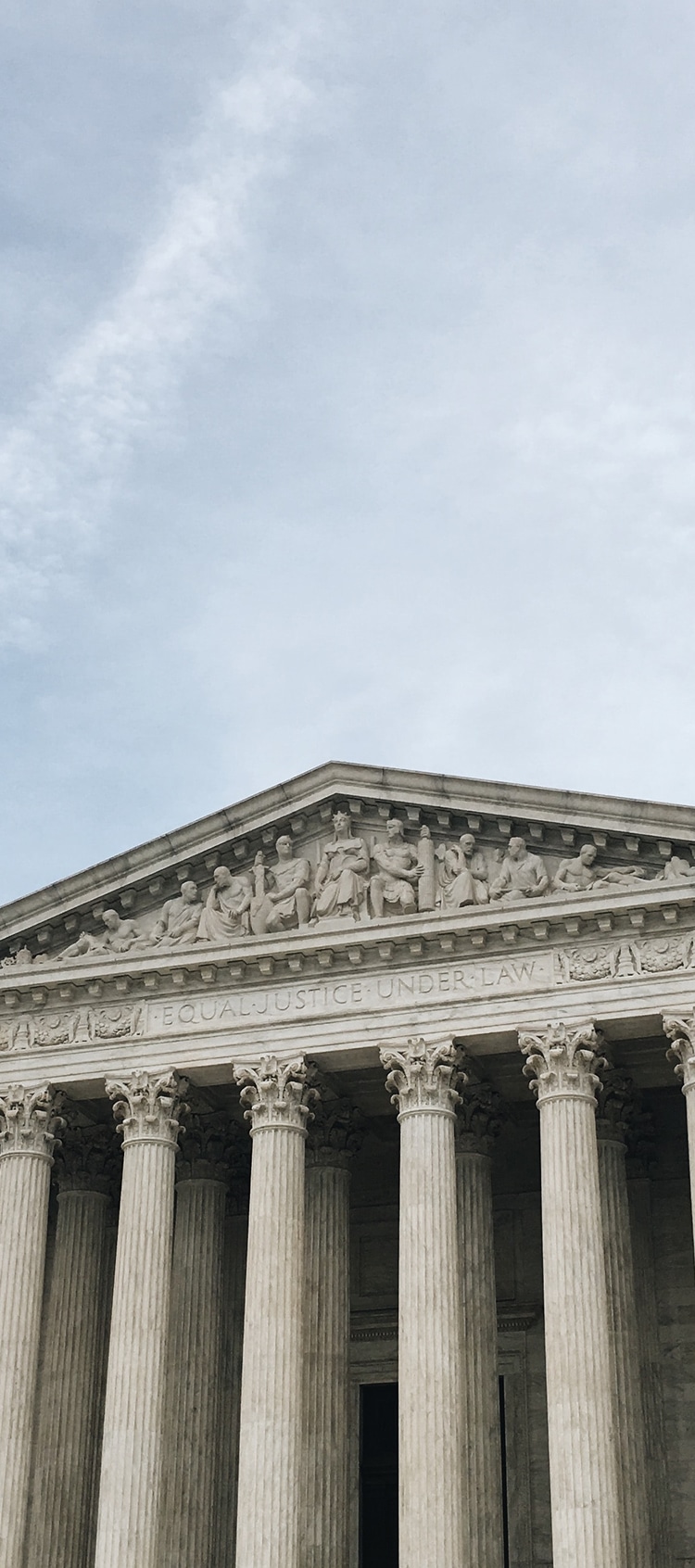
cars on the open road The facade of a classical government building with tall columns and a sculpted pediment. The phrase “EQUAL JUSTICE UNDER LAW” is inscribed above the entrance. The sky is lightly clouded above.

St. Louis Industrial Equipment Defect Attorneys Fighting for Injured Workers

When industrial equipment fails at your workplace, the consequences ripple through every aspect of your life—mounting medical bills from emergency surgery, weeks or months without a paycheck, and the uncertainty of whether you’ll ever return to the job that supported your family. You face immediate worries about how to cover rent, whether your health insurance will continue, and who will care for your children while you recover.

$5B+
Won In Negotiated Settlements
Top 1%
Trial Lawyers In The USA
1200+
5-Star Reviews Nationwide

Case Evaluation

Tell us about your situation to see if you have a case.

    This site is protected by reCAPTCHA and the Google Privacy Policy and Terms of Service apply.

    Let Us Make Your Case, Our Cause

    Our attorneys understand these pressures because we’ve helped hundreds of injured workers navigate them, and we want you to know that you can speak with us at no cost by calling (314) 408-6136 for a free consultation with no upfront fees—you pay nothing unless we recover compensation for you.

    While your employer’s workers’ compensation insurance may cover basic medical expenses and a portion of lost wages, these benefits often fall far short of addressing the full scope of your losses, especially when defective equipment manufactured by a third party caused your injuries. At OnderLaw, we’ve spent years navigating the complex intersection between workers’ compensation limitations and third-party product liability opportunities, helping injured workers throughout Missouri and Illinois recover compensation in negotiated settlements that go beyond basic wage replacement. Because industrial accidents often involve multiple liable parties beyond your employer, understanding your rights to pursue additional compensation through product liability claims becomes crucial to your financial recovery and long-term stability, which is why we investigate every potential avenue for holding manufacturers, distributors, and maintenance companies accountable when their defective equipment harms workers.

    James Onder Attorney OnderLaw | Photo Jim Onder

    Onder Wins

    Unlike many firms that treat clients like case numbers, we provide direct attorney access throughout your case, ensuring you work with experienced lawyers who understand both the legal complexities and personal challenges you’re facing after a serious collision.

    • $5+ Billion In Negotiated Settlements
    • $300M+ In Jury Verdicts
    • Voted Best Law Firm In St. Louis 
    Personal Injury Case Consultation

    “Every case is an opportunity to protect someone else’s family from tragedy”

    Attorney Jim Onder in Downtown St. Louis in front of the courthouse
    Jim Onder
    Founder & Managing Partner

    When Workers’ Compensation Isn’t Enough: Third-Party Equipment Defect Claims

    Missouri’s workers’ compensation system provides essential immediate benefits but includes significant limitations that may leave seriously injured workers without full recovery. When defective industrial equipment causes your injury, third-party product liability claims against manufacturers offer a pathway to comprehensive compensation beyond workers’ comp restrictions.

    Workers' Comp Limitations

    Workers’ compensation in Missouri covers medical treatment and approximately two-thirds of your average weekly wage according to Missouri Department of Labor data (2023), but it explicitly excludes compensation for pain and suffering, emotional distress, loss of enjoyment of life, and punitive damages—elements that often represent the largest portion of personal injury settlements. Furthermore, permanent disability benefits are capped based on predetermined schedules that may not reflect the true impact of losing a limb or suffering permanent impairment in today’s economy.

    Third-Party Product Liability

    When defective industrial equipment causes your injury, you may have grounds to pursue a third-party product liability claim against the equipment’s manufacturer, distributor, or maintenance company—entities not protected by workers’ compensation immunity. These third-party claims operate independently from your workers’ comp case, allowing you to seek full compensation for all damages while still receiving workers’ comp benefits. In practice, this means that while workers’ compensation might cover your immediate medical bills and provide $800 weekly for lost wages, a successful product liability claim could potentially secure additional compensation for your pain, suffering, future medical needs, and diminished earning capacity.

    Manufacturer Strict Liability

    The distinction between employer liability and manufacturer liability becomes particularly important when equipment defects cause catastrophic injuries, as manufacturers remain strictly liable for injuries caused by defective products under Missouri law (RSMo §537.760) regardless of the employment relationship between the victim and the product’s end user. This dual-track approach creates a pathway to justice that workers’ compensation alone cannot provide, which is why investigating potential third-party claims should begin immediately after any serious industrial equipment accident.

    OnderLaw Recent Case Results

    Our greatest results have been the relationships we’ve forged with clients we’ve helped and the lives they’ve achieved after horrific accidents with the settlements our work brought about.

    Every case is different and handled differently, but we are proud of what we have accomplished on behalf of previous clients. From multi-billion dollar mass tort settlements to individual personal injury verdicts, we fight for every penny of compensation our clients deserve.

    Past results do not guarantee future outcomes, every case is different*

    Recent victories creating lasting change across Missouri

    Types of Industrial Equipment Defects We Handle

    Industrial workplaces contain dozens of complex machines and tools, each presenting unique hazards when design flaws, manufacturing defects, or inadequate safety warnings compromise their safe operation. Understanding which equipment categories most frequently cause injuries helps workers recognize when manufacturer accountability may extend beyond employer responsibility.

    Our attorneys have successfully handled cases involving virtually every category of industrial equipment, from massive construction cranes to handheld power tools, understanding that each type of equipment failure requires specialized knowledge of industry standards, safety regulations, and common defect patterns. Because equipment manufacturers often rush products to market or cut corners on safety features to reduce costs, workers face unnecessary risks that proper design and testing could have prevented, creating liability when those shortcuts result in serious injuries.

    Heavy Machinery and Construction Equipment

    Construction sites and industrial facilities rely on cranes, excavators, bulldozers, forklifts, and aerial lifts that must function flawlessly to prevent catastrophic accidents. Common defects in heavy machinery include hydraulic system failures that cause sudden drops or uncontrolled movements, structural weaknesses in boom assemblies that lead to collapses, inadequate stability systems resulting in tip-overs, and faulty brake mechanisms that fail during critical operations. When a tower crane’s slewing ring cracks due to metallurgical defects or a forklift’s mast assembly fails because of design flaws, the resulting injuries often prove career-ending or fatal, demanding thorough investigation of all responsible parties including manufacturers, maintenance contractors, and parts suppliers.


    Power Tools and Hand Equipment

    Although smaller than heavy machinery, defective power tools cause thousands of serious injuries annually when safety guards fail, triggers malfunction, or electrical components short-circuit. Circular saws with inadequate blade guards, nail guns with defective safety mechanisms, grinders that shatter during use, and pneumatic tools with faulty pressure regulators all represent common hazards that manufacturers should have addressed through proper design and testing. These tools’ high-speed operation and proximity to workers’ hands and faces mean that even momentary malfunctions can cause amputations, eye injuries, or severe lacerations requiring extensive reconstructive surgery, making manufacturer accountability essential when design or manufacturing defects contribute to these devastating outcomes.

    Safety Equipment and Protective Gear

    Ironically, equipment designed to protect workers sometimes fails at critical moments due to manufacturing defects or design flaws, turning safety devices into sources of injury. Fall protection harnesses with defective buckles or worn webbing, safety guards that detach from machinery, lockout/tagout devices that fail to prevent equipment activation, and personal protective equipment that doesn’t meet advertised specifications all represent actionable product defects. When safety equipment fails, workers often suffer more severe injuries because they reasonably relied on these devices for protection while performing inherently dangerous tasks, creating particularly strong liability claims against manufacturers who marketed equipment as meeting safety standards it actually failed to satisfy.

    Material Handling Equipment

    Conveyor systems, hoists, chains, slings, and industrial carts move thousands of pounds of materials daily, creating severe crush and strike hazards when components fail. Conveyor belts that suddenly reverse direction, hoists with defective limit switches, chains with inadequate weight ratings, and platform trucks with structural defects have all caused serious workplace injuries that could have been prevented through proper engineering and quality control. Because material handling equipment operates continuously in many facilities, even minor defects can lead to catastrophic failures when stressed by regular use, making thorough investigation of maintenance records and manufacturer specifications essential to establishing liability.

    Led by Attorneys Who Believe in Causes,
    Not Just Cases

    Our Personal Injury Attorneys have decades of experience transforming personal tragedies into wins for our clients.

    Common Industrial Equipment Injuries and Their Causes

    Industrial equipment accidents inflict some of the most severe injuries seen in any workplace, with lasting consequences that extend far beyond initial medical treatment. Manufacturing sector data from the Bureau of Labor Statistics (2023) shows 2.8 injuries per 100 workers annually, with many involving permanent disabilities that end careers and require lifetime medical care.

    Crush Injuries

    Crush injuries from hydraulic press failures or conveyor accidents often result in multiple fractures, internal organ damage, and compartment syndrome requiring emergency surgery and extended rehabilitation.

    Amputations

    Amputations caused by unguarded machinery or sudden equipment activation represent particularly devastating injuries, as losing a limb not only ends most industrial careers but also imposes lifetime medical costs for prosthetics, therapy, and psychological counseling that workers’ compensation schedules inadequately address.

    Burns

    Burns from electrical equipment failures, steam releases, or hydraulic fluid injuries create unique challenges, as these injuries often require months of painful treatment at specialized burn centers, multiple skin grafts, and leave permanent scarring that affects both physical function and emotional well-being.

    Traumatic Brain Injuries

    Traumatic brain injuries from falling equipment, explosions, or being struck by moving machinery parts can cause cognitive impairments, personality changes, and seizure disorders that prevent any return to work while requiring lifetime medical supervision.

    Spinal Cord Injuries

    Spinal cord injuries resulting from equipment collapses, falls from defective lifts, or being caught between moving parts may cause paralysis, requiring home modifications, adaptive equipment, and round-the-clock care that costs millions over a lifetime.

    Common Industrial Equipment Injuries

    The connection between equipment design flaws and injury patterns becomes clear when examining how specific defects cause predictable injuries—inadequate emergency stops lead to crushing and amputation, missing guards result in lacerations and degloving injuries, and electrical defects cause burns and electrocution.

    Crush Injuries

    Crush injuries from hydraulic press failures or conveyor accidents often result in multiple fractures, internal organ damage, and compartment syndrome requiring emergency surgery and extended rehabilitation.

    Amputations

    Amputations caused by unguarded machinery or sudden equipment activation represent particularly devastating injuries, as losing a limb not only ends most industrial careers but also imposes lifetime medical costs for prosthetics, therapy, and psychological counseling that workers’ compensation schedules inadequately address.

    Burns

    Burns from electrical equipment failures, steam releases, or hydraulic fluid injuries create unique challenges, as these injuries often require months of painful treatment at specialized burn centers, multiple skin grafts, and leave permanent scarring that affects both physical function and emotional well-being.

    Traumatic Brain Injuries

    Traumatic brain injuries from falling equipment, explosions, or being struck by moving machinery parts can cause cognitive impairments, personality changes, and seizure disorders that prevent any return to work while requiring lifetime medical supervision.

    Spinal Cord Injuries

    Spinal cord injuries resulting from equipment collapses, falls from defective lifts, or being caught between moving parts may cause paralysis, requiring home modifications, adaptive equipment, and round-the-clock care that costs millions over a lifetime.

    The connection between equipment design flaws and injury patterns becomes clear when examining how specific defects cause predictable injuries—inadequate emergency stops lead to crushing and amputation, missing guards result in lacerations and degloving injuries, and electrical defects cause burns and electrocution.

    Additional Legal Claims in Industrial Equipment Cases

    The connection between equipment design flaws and injury patterns becomes clear when examining how specific defects cause predictable injuries—inadequate emergency stops lead to crushing and amputation, missing guards result in lacerations and degloving injuries, and electrical defects cause burns and electrocution.

    Missouri's "Something More" Doctrine

    Beyond pursuing manufacturers and distributors, Missouri law recognizes limited circumstances where injured workers may hold coworkers accountable for workplace injuries. While Missouri’s workers’ compensation law generally protects employers and coworkers from personal injury lawsuits through exclusive remedy provisions, the state recognizes an important exception known as the “something more” doctrine codified in RSMo §287.120.1. This doctrine allows injured workers to sue coworkers who commit affirmative negligent acts that go beyond mere negligence or failure to perform duties, creating potential liability for supervisors or equipment operators whose deliberate actions cause injuries. To establish coworker liability, you must prove that the coworker committed an affirmative negligent act that directly caused your injuries, not merely that they failed to act or made an ordinary mistake. Examples might include a supervisor who deliberately removes safety guards from machinery to speed production, a coworker who intentionally operates equipment while intoxicated, or a maintenance worker who knowingly uses incorrect parts that compromise equipment safety.

    OSHA Violations and Equipment Defect Claims

    Federal workplace safety regulations intersect with product liability law in ways that can significantly strengthen your claims against equipment manufacturers. When OSHA violations coincide with equipment defects, the regulatory breaches provide powerful evidence supporting your product liability claims while potentially opening additional avenues for compensation. According to OSHA data (2023), investigators found safety violations in 35% of workplace fatality investigations, with many involving inadequate machine guarding, lockout/tagout failures, or improper equipment maintenance—violations that often reveal underlying equipment defects. Because OSHA standards establish minimum safety requirements that all workplace equipment must meet under regulations like 29 C.F.R. §1910.212 (general machine guarding requirements), violations of these standards can demonstrate that equipment was unreasonably dangerous even if technically functional. OSHA’s investigation following a serious industrial accident creates valuable documentation for your legal claims, as investigators photograph the accident scene, interview witnesses, test equipment, and issue detailed reports identifying safety violations.

    The connection between equipment design flaws and injury patterns becomes clear when examining how specific defects cause predictable injuries—inadequate emergency stops lead to crushing and amputation, missing guards result in lacerations and degloving injuries, and electrical defects cause burns and electrocution.

    Investigation and Evidence in Equipment Defect Cases

    Preserving evidence after an industrial equipment accident requires immediate action because crucial proof disappears quickly in active workplaces. Before any equipment is moved, repaired, or discarded, photographs from multiple angles should document the equipment’s position, condition, control settings, and any visible damage or defects.

    Video evidence has become increasingly valuable, as many industrial facilities have surveillance systems that capture accidents, and securing this footage before automatic deletion or overwriting requires prompt legal intervention through preservation letters and court orders if necessary. Maintenance records, inspection reports, and equipment logs provide essential documentation showing whether employers properly maintained equipment and whether any known issues existed before your accident, as these records might reveal patterns of breakdowns, previous near-misses, or deferred maintenance that contributed to equipment failure. Similarly, training records, safety meeting minutes, and internal incident reports can demonstrate whether employers knew about equipment hazards but failed to address them or properly train workers.

    Witness statements from coworkers who observed the accident or previously operated the same equipment offer crucial testimony about equipment behavior, unusual sounds or movements before failure, and whether similar problems had occurred before. Because witnesses may face pressure from employers or fear job loss for speaking out, having attorneys conduct witness interviews protects both the witness and the integrity of their testimony while ensuring that critical information gets documented before memories fade or workplace dynamics change. Working with OSHA investigators provides additional evidence-gathering opportunities, as their regulatory authority allows them to access areas, documents, and personnel that private investigators cannot reach, though coordination requires careful legal strategy to protect your civil claims while fulfilling your obligations to cooperate with workplace safety investigations.

    Our firm begins evidence preservation immediately upon being retained, understanding that the first 48 hours after an industrial accident often determine whether crucial proof survives or disappears, which is why early consultation becomes so important even if you’re still hospitalized or focused on immediate medical needs.


    Frequently Asked Questions About Industrial Equipment Defect Claims

    Can I sue if I was injured by equipment at work?

    Yes, you may be able to sue equipment manufacturers, distributors, and maintenance companies even though workers’ compensation prevents suing your employer directly. While workers’ compensation provides your exclusive remedy against your employer for workplace injuries under Missouri law (RSMo §287.120), third-party product liability claims remain available when defective equipment causes injuries, allowing you to seek full compensation beyond workers’ comp limits. These third-party claims can include compensation for pain and suffering, emotional distress, and other damages that workers’ compensation doesn’t cover, potentially resulting in significantly higher recoveries than workers’ comp alone would provide.

    What if my employer knew the equipment was dangerous?

    If your employer knew equipment was dangerous but required you to use it anyway, you might have claims under Missouri’s “something more” doctrine if supervisors committed affirmative negligent acts beyond mere negligence. Additionally, employer knowledge of dangers strengthens third-party claims against equipment manufacturers by showing that defects were apparent and unreasonably dangerous, though workers’ compensation immunity still generally protects employers from direct lawsuits under RSMo §287.120. However, this knowledge can support claims that manufacturers failed to provide adequate warnings or safety features, as equipment that creates obvious hazards even to non-experts may be deemed unreasonably dangerous under Missouri product liability law.

    How long do I have to file an industrial equipment defect claim?

    Missouri law provides five years from the date of injury to file personal injury claims under RSMo §516.120(4), though workers’ compensation claims have much shorter deadlines requiring prompt action. Product liability claims against equipment manufacturers follow the five-year personal injury statute, but evidence preservation and witness availability make earlier filing advantageous, particularly when OSHA investigations or employer incident reports remain fresh. Because physical evidence deteriorates and witnesses’ memories fade over time, consulting with an attorney within weeks of your accident rather than waiting months or years significantly strengthens your potential claims, even though the legal deadline may be years away.

    What if I was partially at fault for the equipment accident?

    Missouri’s pure comparative fault system under RSMo §537.765 allows recovery even if you share some responsibility for the accident, though your compensation may be reduced by your percentage of fault. Equipment manufacturers often claim worker error caused accidents, but design defects that make equipment susceptible to foreseeable misuse remain actionable, and proper safety devices should prevent injuries even when workers make mistakes. In practice, this means that even if a jury determines you were 30% responsible for your accident, you could still recover 70% of your total damages, which in a serious injury case might still represent hundreds of thousands of dollars in compensation beyond what workers’ compensation provides.

    Can independent contractors file equipment defect claims?

    Independent contractors have greater flexibility than employees in pursuing equipment defect claims because workers’ compensation exclusivity doesn’t apply to them, allowing direct claims against property owners and equipment suppliers. Additionally, contractors can pursue product liability claims against equipment manufacturers just like employees, potentially recovering full damages without workers’ compensation limitations affecting their claims. However, the classification of your work relationship matters significantly, as employers sometimes misclassify employees as independent contractors, which is why having an attorney review your employment status becomes important when evaluating all available claims after an industrial equipment accident.


    Proving Liability in Industrial Equipment Cases

    Establishing manufacturer responsibility for industrial equipment defects requires comprehensive evidence and expert analysis that goes far beyond typical accident documentation. Unlike typical personal injury cases where you must prove negligence, Missouri product liability law allows strict liability claims under RSMo §537.760, meaning you need only show that the equipment was unreasonably dangerous when it left the manufacturer’s control.

    However, defendants in industrial cases often argue that employer modifications, improper maintenance, or worker misuse caused accidents, making thorough investigation and expert testimony crucial to proving manufacturer liability. Physical evidence from industrial accidents often disappears quickly as employers resume operations or dispose of damaged equipment, requiring immediate action to preserve crucial proof. Our legal team works with forensic engineers, metallurgists, and industrial safety experts who can examine failed components, identify design flaws or manufacturing defects, and reconstruct accident sequences using scientific analysis that withstands scrutiny in litigation.

    These experts also review maintenance records, inspection reports, and equipment specifications to determine whether the equipment met industry standards and whether any modifications affected its safety. Industry standards published by organizations like ANSI, ASME, and equipment-specific trade associations establish baseline safety requirements that help prove defects, as equipment failing to meet these voluntary standards often qualifies as unreasonably dangerous under Missouri law. Additionally, similar incidents involving the same equipment model, previous recalls, or internal manufacturer documents acknowledging safety concerns can demonstrate that manufacturers knew about defects but failed to address them, creating particularly strong liability claims when manufacturers prioritized profits over worker safety.

    Because industrial equipment manufacturers often have extensive legal resources and engineering expertise, building a compelling liability case requires matching their technical sophistication with equally qualified experts and thorough preparation, which is why early involvement of experienced attorneys can make the difference between successful claims and dismissed cases.

    What Our Clients Say

    I highly recommend Mr. Onder. He is an excellent attorney and addresses client issues and concerns in a fast and efficient manner, answers any questions we have, and keeps us informed about the progress of our case.

    Bill

    The firm was very willing to hear my problems and discuss with me even though I was not qualified for a case. Their staff spent about 30 minutes with me discussing records and diagnosis and I appreciate them trying to help me.

    Andy

    I was in a bad car accident where I was hit, and my car flipped and almost crushed and calling Jim Onder was the BEST DECISION I made to help me get what I deserved (it was the other cars fault and witnesses will say it also) for everything that I went through. Beside all my physical pain I was having a hard time dealing with things after the accident and the insurance company and I missed lots of work. I don't know how I would have dealt with it...

    Karly

    I have known Jim Onder and his team for a few years now. I have always been impressed by the way they take care of their clients. It's not always about the case, but the individual. I would recommend anyone seeking legal counsel to give Jim and his team a call.

    John

    I don't have enough words to describe how amazing the experience with this firm was. They work very hard to make sure you have winning results. I could not have asked for better services. From the moment I first called until my case was over, I was at ease that I had made the right choice.

    Mike

    Take Action to Protect Your Rights After an Industrial Equipment Injury  

    Time-sensitive evidence in industrial equipment cases demands immediate legal consultation to preserve your rights and maximize potential recovery beyond workers’ compensation limits. While you focus on medical treatment and recovery, our attorneys can immediately begin investigating your accident, preserving crucial evidence, and identifying all potentially liable parties before evidence disappears or witnesses become unavailable.

    Because equipment-related injuries cost employers $15.8 billion annually according to National Safety Council data (2023), manufacturers and their insurers deploy substantial resources to defend these claims, making experienced legal representation essential to level the playing field. Our firm coordinates workers’ compensation benefits with third-party product liability claims, ensuring you receive immediate financial support while pursuing comprehensive compensation for all damages. With decades of experience handling industrial accident cases throughout Missouri and Illinois, we understand the technical complexities of equipment defect claims and maintain relationships with engineering experts who can prove manufacturer liability when defective equipment causes serious injuries.

    $5B+
    In Negotiated Settlements
    $500M+
    In Jury Verdicts
    Attorney Jim Onder in Downtown St. Louis in front of the courthouse

    Get Started with Your Industrial Equipment Defect Claim Today

    Missouri recorded 114 workplace fatalities in 2023 according to Bureau of Labor Statistics Census of Fatal Occupational Injuries data, with many more workers suffering permanent disabilities that end careers and impose lifetime medical costs.

    Don’t let workers’ compensation limits define your recovery when defective equipment caused your injuries—call OnderLaw today at (314) 408-6136 for a free consultation where we’ll explain your rights, evaluate potential claims, and begin fighting for the full compensation you may be entitled to with no upfront costs or fees unless we win your case.

    24/7
    Call Us Anytime
    $0
    Zero Upfront Costs

    Contact Our Attorneys Now

    Our free consultation helps you understand your rights and options.

      This site is protected by reCAPTCHA and the Google Privacy Policy and Terms of Service apply.