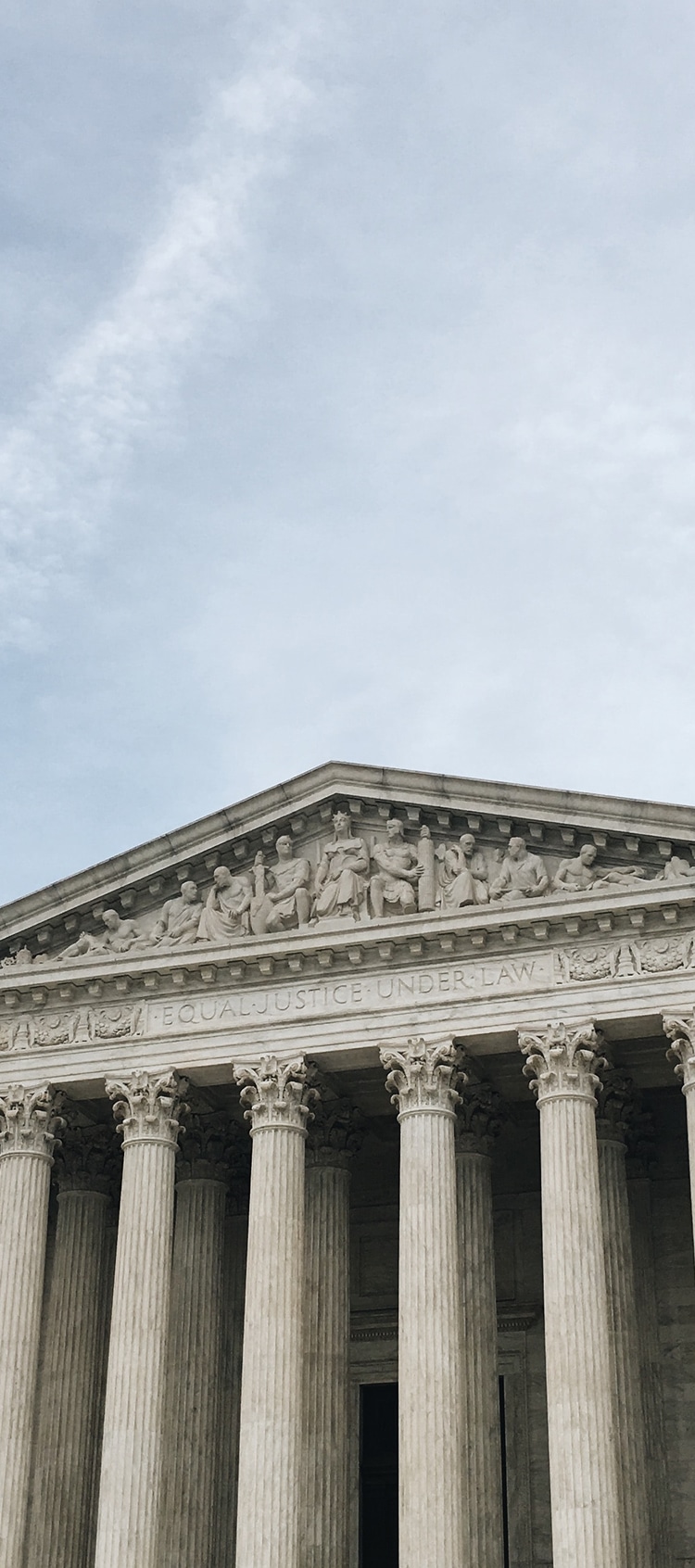
cars on the open road The facade of a classical government building with tall columns and a sculpted pediment. The phrase “EQUAL JUSTICE UNDER LAW” is inscribed above the entrance. The sky is lightly clouded above.

St. Louis Whistleblower Attorneys Fighting Against Retaliation

Speaking up about fraud, safety violations, or illegal activity at work takes tremendous courage, especially when you know your job, reputation, and financial security may be at risk. The fear of losing your income, facing blacklisting in your industry, or dealing with harassment from supervisors can feel overwhelming right now.

$5B+
Won In Negotiated Settlements
Top 1%
Trial Lawyers In The USA
1200+
5-Star Reviews Nationwide

Case Evaluation

Tell us about your situation to see if you have a case.

    This site is protected by reCAPTCHA and the Google Privacy Policy and Terms of Service apply.

    Let Us Make Your Case, Our Cause

    At OnderLaw, we provide free consultations with no upfront costs, helping you understand your rights before taking any risks—call (314) 408-6136 today. Our attorneys have recovered over $5 billion in negotiated settlements for clients across all practice areas, and we understand the unique challenges whistleblowers face throughout Missouri and Southern Illinois.

    Whether you’re considering reporting Medicare fraud, government contract violations, or workplace safety hazards, federal and Missouri laws provide powerful protections for employees who do the right thing, though navigating these overlapping statutes requires experienced legal guidance. If you’ve already blown the whistle and faced retaliation, immediate legal protection becomes essential to preserve both your rights and potential recovery. We stand beside whistleblowers throughout the entire process, from initial disclosure through investigation and, if necessary, litigation to secure the compensation and justice you deserve.


    James Onder Attorney OnderLaw | Photo Jim Onder

    Onder Wins

    Unlike many firms that treat clients like case numbers, we provide direct attorney access throughout your case, ensuring you work with experienced lawyers who understand both the legal complexities and personal challenges you’re facing after a serious collision.

    • $5+ Billion In Negotiated Settlements
    • $300M+ In Jury Verdicts
    • Voted Best Law Firm In St. Louis 
    Personal Injury Case Consultation

    “Every case is an opportunity to protect someone else’s family from tragedy”

    Attorney Jim Onder in Downtown St. Louis in front of the courthouse
    Jim Onder
    Founder & Managing Partner

    Understanding Whistleblower Law in Missouri

    Whistleblower protections in Missouri depend on your employment status and the type of wrongdoing reported, with federal and state laws offering different standards, deadlines, and remedies that require careful legal analysis.

    Private Sector Protections

    The Missouri Whistleblower Protection Act, enacted in 2017 under RSMo § 285.575, shields private sector employees who report unlawful acts or refuse to participate in illegal activities, but only if their employer has six or more employees—a limitation that excludes many small business workers from protection. Under this relatively new law, protected employees may be entitled to remedies including back pay, medical expenses for treatment related to retaliation, and double damages for willful violations, though the statute explicitly excludes traditional punitive damages and emotional distress compensation that may be available in other states.

    Public Employee Protections

    Public employees in Missouri receive protection under a different statute, RSMo § 105.055, which was amended in 2018 to strengthen protections for state and local government workers who make protected disclosures about waste, fraud, or abuse. However, public employee whistleblowers face a strict one-year deadline to file claims and must meet a clear and convincing evidence standard initially, making early legal consultation essential to preserve your rights.

    Cross-Border Considerations

    For our clients in Southern Illinois, the Illinois Whistleblower Act provides broader protections with recent amendments effective January 1, 2025, potentially offering more favorable remedies than Missouri law depending on where the violation occurred and your employer’s location. These cross-border considerations become particularly important in the St. Louis metropolitan area, where many employees work across state lines. Understanding which law provides the strongest protection for your specific situation requires careful analysis of multiple factors including your employer’s structure, the type of wrongdoing reported, and the timing of any retaliatory actions.

    OnderLaw Recent Case Results

    Our greatest results have been the relationships we’ve forged with clients we’ve helped and the lives they’ve achieved after horrific accidents with the settlements our work brought about.

    Every case is different and handled differently, but we are proud of what we have accomplished on behalf of previous clients. From multi-billion dollar mass tort settlements to individual personal injury verdicts, we fight for every penny of compensation our clients deserve.

    Past results do not guarantee future outcomes; every case is different.

    Recent victories creating lasting change across Missouri

    Types of Whistleblower Cases We Handle

    When fraud or illegal activity harms taxpayers, patients, investors, or workers, whistleblowers serve as society’s early warning system by exposing wrongdoing that might otherwise continue unchecked. The complexity of modern fraud schemes requires attorneys who understand not just the legal framework but also the specific regulations governing each industry, from healthcare billing codes to environmental reporting requirements. Because different types of fraud fall under different federal and state laws with varying deadlines, reward structures, and procedural requirements, identifying the right legal pathway from the start can mean the difference between a successful claim worth millions and a missed opportunity that leaves you unprotected.

    Healthcare Fraud Whistleblowing

    Medicare and Medicaid fraud costs taxpayers billions annually through schemes that include false billing for services never provided, upcoding routine procedures to more expensive codes, kickback arrangements between providers and pharmaceutical companies, and unnecessary medical procedures performed solely to increase billing. According to the Department of Justice (2023), healthcare fraud represents the largest category of False Claims Act recoveries, and our team has experience with complex healthcare fraud cases involving hospitals, nursing homes, pharmaceutical companies, and medical device manufacturers throughout the St. Louis region.

    Government Contract Fraud

    Defense contractors, construction companies, and service providers defraud the government through various schemes including bid-rigging to eliminate competition, false certifications about product quality or testing standards, billing for work never performed or materials never delivered, and violations of procurement regulations designed to ensure fair competition and value for taxpayers.

    Tax Fraud Whistleblowing

    The IRS whistleblower program rewards individuals who report substantial tax violations including corporate tax evasion through offshore accounts, fraudulent tax shelters designed to hide income, false deductions and credits, and other schemes that deprive the government of revenue needed for essential services, with potential awards ranging from 15 to 30 percent of collected proceeds.

    Financial and Securities Fraud

    SEC violations harm both individual shareholders and market integrity through accounting fraud that misrepresents company finances, insider trading based on non-public information, market manipulation schemes, and false statements to investors about company performance or risks, with the SEC awarding over $1.9 billion to whistleblowers since 2012 (SEC, 2024).

    Pharmaceutical Fraud

    Drug companies endanger patients while inflating healthcare costs through off-label marketing of drugs for unapproved uses, falsification or suppression of clinical trial data showing adverse effects, failure to report known safety issues to the FDA, and illegal kickbacks to prescribers who push their products. Our firm has handled numerous dangerous drug cases involving pharmaceutical misconduct that puts profits over patient safety.

    Environmental Violations

    Companies that violate EPA regulations through illegal dumping of hazardous materials, false emissions’ reporting to avoid compliance costs, destruction of protected wetlands, or improper handling of hazardous waste threaten both public health and our natural resources while gaining unfair competitive advantages over law-abiding businesses.

    Safety Violations

    OSHA recorded 3,243 whistleblower complaints nationwide in FY2023 (whistleblowers.gov, 2024), many involving concealment of workplace hazards, falsification of safety records to avoid scrutiny, and retaliation against employees who report dangerous conditions that put workers and the public at unnecessary risk. Workers who experience retaliation for reporting safety violations may also have workers’ compensation claims if they suffered injuries on the job.

    Employment Law Violations

    Systematic wage theft through unpaid overtime or misclassification, discrimination cover-ups that perpetuate hostile work environments, intentional misclassification of employees as independent contractors to avoid benefits and taxes, and violations of prevailing wage requirements on government projects harm both workers and honest employers who follow the rules.

    Education Fraud

    For-profit colleges exploit students seeking better opportunities through fraudulent practices including false job placement statistics to lure enrollments, student loan fraud that saddles graduates with debt they cannot repay, grade manipulation to maintain federal funding eligibility, and misuse of Title IV funds intended for legitimate educational purposes.

    COVID-19 Relief Fraud

    The pandemic created unprecedented opportunities for fraud through PPP loan schemes involving false applications, unemployment insurance fraud claiming benefits while employed, false EIDL applications for non-existent businesses, and healthcare provider fraud related to CARES Act programs that diverted emergency resources from legitimate businesses and workers who desperately needed help.

    Construction and Real Estate Fraud

    Federal construction projects face fraud through Davis-Bacon Act violations involving underpayment of prevailing wages, HUD fraud in affordable housing programs that diverts funds from low-income families, false certifications about building materials or safety compliance that endanger occupants, and minority contracting fraud that undermines programs designed to promote diversity in government contracting. Employees injured on construction sites due to safety violations may also need representation from construction accident lawyers.

    Transportation Industry Violations

    The transportation sector experiences fraud through DOT hours-of-service violations that create dangerous driving conditions, falsified driver logs concealing fatigue-related risks, safety regulation breaches putting motorists at risk, and fraudulent billing in federally funded transportation projects that waste taxpayer dollars while compromising infrastructure quality.

    Led by Attorneys Who Believe in Causes,
    Not Just Cases

    Our Personal Injury Attorneys have decades of experience transforming personal tragedies into wins for our clients.

    Whistleblower Retaliation: Know Your Rights

    Retaliation against whistleblowers takes many forms beyond just termination, and recognizing these tactics early allows you to document violations that strengthen your legal protection. Missouri law and federal statutes provide overlapping protections against these retaliatory acts, though the specific remedies available and deadlines for filing claims vary significantly depending on which law applies to your situation.

    Negative Performance Reviews

    Sudden negative performance reviews after years of positive evaluations

    Demotion or Transfer

    Demotion or transfer to less desirable positions

    Exclusion from Work

    Exclusion from meetings or projects essential to your job function

    Harassment

    Harassment or hostile treatment from supervisors and colleagues who view you as disloyal

    Industry Blacklisting

    Blacklisting within your industry that prevents future employment

    Denied Promotions

    Denial of promotions or raises you were previously promised

    Impossible Standards

    Increased scrutiny or impossible performance standards designed to create a paper trail justifying termination

    The Whistleblower Legal Process in Missouri

    Understanding the whistleblower legal process helps reduce anxiety about the unknown while allowing you to make informed decisions about when and how to report fraud. The journey from initial disclosure to resolution often spans several years and involves multiple stages, each with its own requirements and opportunities.

    1. Confidential Consultation

      As your legal team, we begin with a confidential consultation to evaluate your evidence, assess which laws apply to your situation, and develop a strategic approach that maximizes both your protection from retaliation and your potential recovery under applicable reward programs.

    2. Evidence Gathering

      During this initial phase, we help you gather and preserve crucial documentation including emails that demonstrate knowledge of the fraud, financial records showing the scope of false claims, internal reports or audits identifying problems, and any other evidence that demonstrates the fraudulent scheme while ensuring you don’t violate any confidentiality agreements or accidentally alert the wrongdoers to your intentions. This evidence-gathering stage proves critical because whistleblower cases often turn on the quality and specificity of documentation rather than general allegations, and preserving evidence before your employer suspects your cooperation protects against destruction or alteration of key documents.

    3. Filing Your Claim

      Once we’ve built a strong evidentiary foundation, we file your claim with the appropriate agency—whether that’s the Department of Justice for False Claims Act cases, the SEC for securities fraud, the IRS for tax violations, or OSHA for safety-related retaliation—using sealed filing procedures that maintain confidentiality during the investigation phase.

    4. Government Investigation

      The government then investigates your allegations through a process that typically takes 18 to 24 months but can extend longer for complex schemes involving multiple defendants or jurisdictions, during which you may be asked to provide additional information or testimony while maintaining strict confidentiality about the investigation’s existence.

    5. Intervention Decision & Litigation

      If the government intervenes and pursues the case, they lead the litigation while we protect your interests as the whistleblower, ensuring you receive appropriate credit for initiating the case and maximizing your percentage of any recovery. However, if the government declines intervention—which happens in approximately 80 percent of cases—we can still pursue the case on the government’s behalf in what’s called a qui tam action, essentially stepping into the government’s shoes to recover fraudulently obtained funds.

    6. Seek Immediate Medical Evaluation

      Seek medical evaluation immediately even if you feel fine initially, because adrenaline masks pain and many serious injuries like traumatic brain injuries, internal bleeding, and spinal damage don’t show symptoms until hours or days after impact when treatment becomes more complicated and expensive.

    STATUTES OF LIMITATIONS:

    Throughout this process, timing remains critical because Missouri’s whistleblower statute of limitations varies by the type of claim you’re pursuing. Federal False Claims Act cases must be filed within six years of the violation or three years after the government knew or should have known about the fraud, but no more than ten years total from the violation date. Missouri’s Whistleblower Protection Act doesn’t specify a limitations period, so courts may apply either a three-year or five-year deadline—we recommend filing conservatively within three years to avoid any risk of dismissal on technical grounds.

    Compensation and Rewards in Whistleblower Cases

    Financial rewards for whistleblowers serve the dual purpose of incentivizing fraud reporting and compensating individuals who risk their careers to protect the public interest.

    False Claims Act Rewards (15-30%)

    Under the False Claims Act, whistleblowers may receive between 15 and 30 percent of the government’s recovery, with the Department of Justice reporting $488 million in whistleblower awards from $2.2 billion in total recoveries during fiscal year 2022 (DOJ, 2023). The exact percentage depends on several factors including whether the government intervenes in your case (intervention cases typically yield 15-25 percent while declined cases may reach 25-30 percent), the significance of your information to the investigation, your level of cooperation throughout the process, and whether you were the first to file if multiple whistleblowers report similar fraud.

    SEC Whistleblower Rewards (10-30%)

    SEC whistleblower rewards range from 10 to 30 percent of monetary sanctions exceeding $1 million, with the commission awarding over $1.9 billion to whistleblowers since the program’s inception in 2012 according to SEC data from 2024.

    IRS Whistleblower Rewards (Up to 30%)

    The IRS whistleblower program offers up to 30 percent of collected proceeds in large tax fraud cases exceeding $2 million, though the process often takes longer than other whistleblower programs due to the complexity of tax investigations and the taxpayer’s appeal rights that must be exhausted before awards can be paid.

    Retaliation Damages

    In addition to percentage-based rewards, employees who suffer retaliation for whistleblowing may be entitled to damages designed to make them whole again. These remedies may include back pay covering lost wages from termination or demotion, front pay in lieu of reinstatement when returning to the hostile work environment isn’t feasible, compensation for medical expenses related to stress or other health impacts from retaliation, and in federal cases, attorney’s fees that the defendant must pay so legal costs don’t reduce your recovery. Missouri’s Whistleblower Protection Act specifically allows for double damages in cases of willful violation, though it excludes traditional punitive damages and emotional distress compensation that might be available under federal law or in other states, making the choice of legal pathway particularly important for maximizing recovery.

    Financial rewards for whistleblowers serve the dual purpose of incentivizing fraud reporting and compensating individuals who risk their careers to protect the public interest.

    What Our Clients Say

    I highly recommend Mr. Onder. He is an excellent attorney and addresses client issues and concerns in a fast and efficient manner, answers any questions we have, and keeps us informed about the progress of our case.

    Bill

    The firm was very willing to hear my problems and discuss with me even though I was not qualified for a case. Their staff spent about 30 minutes with me discussing records and diagnosis and I appreciate them trying to help me.

    Andy

    I was in a bad car accident where I was hit, and my car flipped and almost crushed and calling Jim Onder was the BEST DECISION I made to help me get what I deserved (it was the other cars fault and witnesses will say it also) for everything that I went through. Beside all my physical pain I was having a hard time dealing with things after the accident and the insurance company and I missed lots of work. I don't know how I would have dealt with it...

    Karly

    I have known Jim Onder and his team for a few years now. I have always been impressed by the way they take care of their clients. It's not always about the case, but the individual. I would recommend anyone seeking legal counsel to give Jim and his team a call.

    John

    I don't have enough words to describe how amazing the experience with this firm was. They work very hard to make sure you have winning results. I could not have asked for better services. From the moment I first called until my case was over, I was at ease that I had made the right choice.

    Mike

    Federal vs. State Whistleblower Protections

    The intersection of federal and state whistleblower laws creates a complex legal landscape where choosing the right statute to proceed under can significantly impact your case’s timeline, burden of proof, and available remedies.

    Federal Law Advantages

    Federal laws provide robust protections with nationwide reach, often offering higher damage awards and longer statutes of limitations than state law. Federal statutes like the False Claims Act, Sarbanes-Oxley Act for corporate fraud, and Dodd-Frank Act for securities violations protect whistleblowers regardless of state boundaries, making them particularly attractive for cases involving federal funding, publicly traded companies, or interstate commerce where Missouri law might not reach. We evaluate whether your case qualifies for federal protection based on multiple factors including the type of fraud reported (healthcare fraud involving Medicare or Medicaid automatically triggers federal jurisdiction), your employer’s industry and size (publicly traded companies fall under SEC jurisdiction), whether federal funds are involved directly or indirectly, and the specific retaliatory acts you’ve experienced.

    Missouri State Law

    Missouri’s Whistleblower Protection Act, while more limited than federal statutes, provides important protections for private sector employees reporting state law violations, though it excludes employers with fewer than six employees and all government entities from coverage.

    Illinois Protections

    The Illinois Whistleblower Act, recently strengthened with amendments effective January 1, 2025, may offer better remedies for our Metro East clients, particularly regarding coverage for threats to disclose violations and potential civil penalties against retaliating employers.

    Strategic Venue Considerations

    Understanding which law provides the strongest protection requires analyzing not just the substantive protections but also procedural advantages that can affect your case’s outcome. Federal court may offer more favorable venue options for complex cases, broader discovery rules that help uncover evidence of fraud, and jury pools that understand the importance of protecting whistleblowers. Meanwhile, some state law claims can be resolved more quickly with lower litigation costs, making them attractive for straightforward retaliation cases where federal jurisdiction doesn’t apply or where state law provides adequate remedies without the complexity of federal litigation.

    The intersection of federal and state whistleblower laws creates a complex legal landscape where choosing the right statute to proceed under can significantly impact your case’s timeline, burden of proof, and available remedies.

    Local Resources for St. Louis Whistleblowers

    St. Louis whistleblowers have access to several government offices and support resources that can assist with reporting fraud and understanding your rights.

    Federal Agencies
    State Resources
    U.S. Attorney’s Office for the Eastern District of Missouri

    Located at 111 South 10th Street in downtown St. Louis, handles False Claims Act cases and other federal fraud prosecutions through dedicated attorneys who work with whistleblowers on major healthcare, defense contracting, and financial fraud cases affecting our region.

    OSHA St. Louis Area Office

    1222 Spruce Street, handles complaints about dangerous conditions and retaliation against safety whistleblowers, though their strict filing deadlines make immediate legal consultation essential to preserve your rights.


    Missouri Attorney General’s Medicaid Fraud Control Unit

    With offices at 815 Olive Street, investigates fraud against the state’s Medicaid program. Hotline: 800-286-3932 for reporting suspected violations involving nursing homes, hospitals, or other healthcare providers.


    Missouri State Auditor’s Whistleblower Hotline

    Accepts reports of waste and fraud in state government, recording 385 complaints in 2021 according to the State Auditor’s office.
    Hotline: 800-347-8597


    Frequently Asked Questions

    Can I remain anonymous when reporting fraud?

    While some whistleblower programs allow anonymous reporting through an attorney, maintaining complete anonymity throughout the entire process may not always be possible, especially if the case proceeds to litigation where your testimony becomes necessary to prove the fraud. The SEC and IRS programs permit anonymous filing when you’re represented by an attorney, allowing you to keep your identity confidential from your employer during the investigation phase, which can last months or even years while the government builds its case. However, False Claims Act cases typically require disclosure of your identity during the legal process even though the case remains under seal initially, preventing your employer from learning about the lawsuit until the government decides whether to intervene. An experienced whistleblower attorney can help maximize confidentiality protections through strategic filing decisions, protective orders during litigation that limit disclosure of your identity, and negotiating settlement terms that include non-disclosure provisions where possible to protect your privacy even after the case resolves.

    How long do I have to file a whistleblower claim in Missouri?

    The statute of limitations varies significantly by the type of claim, making immediate legal consultation crucial to preserve your rights before deadlines pass. Federal False Claims Act cases must be filed within six years of the violation or three years after the government knew or should have known about the fraud but no more than ten years total from the violation date, creating a complex calculation that depends on when the fraud was discovered. Missouri’s Whistleblower Protection Act doesn’t specify a clear limitations period, leading to uncertainty about whether courts will apply a three-year or five-year deadline, so we recommend filing conservatively within three years to avoid any risk of dismissal on technical grounds. Public employee claims under Missouri law face a strict one-year deadline from the retaliatory act, while many OSHA whistleblower complaints require filing within just 30 to 180 days of retaliation depending on the specific statute involved, demonstrating why contacting an attorney immediately after experiencing retaliation is essential to preserve all available claims.

    What percentage of recovery do whistleblowers receive?

    Whistleblowers may receive between 15 and 30 percent of the government’s recovery in False Claims Act cases, with the Department of Justice reporting $488 million in whistleblower awards from $2.2 billion in total recoveries during fiscal year 2022 (DOJ, 2023). The exact percentage depends on multiple factors including whether the government intervenes in your case (intervention typically yields 15-25 percent while declined cases may reach 25-30 percent), the significance of your information to uncovering the fraud, your cooperation level throughout the investigation and litigation, whether you were the first to file if multiple whistleblowers report similar fraud, and whether you planned or initiated the fraud yourself which would reduce or eliminate your award. SEC whistleblower awards range from 10 to 30 percent of monetary sanctions exceeding $1 million, with total awards surpassing $1.9 billion since 2012 according to SEC data from 2024, while IRS awards can reach up to 30 percent of collected proceeds in large tax fraud cases though the process often takes several years longer than other programs.

    Can my employer fire me for being a whistleblower?

    No, firing an employee for lawful whistleblowing violates both federal and Missouri law, and protected employees who face such retaliation may be entitled to seek remedies including reinstatement to their former position, back pay with interest from the date of termination, and in some cases double damages for willful violations of the law. However, protection requires following proper reporting procedures because internal reporting alone may not trigger legal protection unless specifically required by company policy or applicable law, and some statutes require reporting to specific government agencies within strict deadlines to qualify for anti-retaliation protection. The key to building a strong retaliation case involves documenting both your protected whistleblowing activity and any adverse employment actions that follow, as establishing the causal connection between your report and the retaliation becomes crucial to proving your case and recovering damages. Similar to how wrongful death cases require establishing causation, whistleblower retaliation claims depend on proving the connection between protected activity and adverse employment action.

    What's the difference between qui tam and whistleblower cases?

    Qui tam cases represent a specific type of whistleblower lawsuit filed under the False Claims Act where the whistleblower sues on behalf of the government to recover funds lost to fraud, potentially earning 15 to 30 percent of any recovery obtained through settlement or trial. General whistleblower cases may involve reporting violations to regulatory agencies like the SEC for securities fraud, IRS for tax evasion, or OSHA for safety violations without filing a lawsuit, with rewards and protections varying by program but often requiring less direct involvement in lengthy litigation. Qui tam cases typically offer higher potential rewards due to the whistleblower’s active participation in litigation but require more substantial evidence of fraud and greater involvement in the legal process, including potentially testifying at depositions and trial, while agency reporting programs may resolve more quickly with less personal exposure but generally offer lower maximum awards.

    Why Choose OnderLaw for Your Whistleblower Case

    Our team handles all types of whistleblower cases from healthcare fraud costing taxpayers billions to environmental violations threatening public health, leveraging our experience in complex litigation to build compelling cases that maximize both your protection from retaliation and your potential recovery under applicable reward programs. Unlike firms that treat whistleblowers as mere informants providing information for a quick settlement, we recognize you as the courageous individual standing up for what’s right despite significant personal risk, and we structure our representation to minimize that risk while maximizing your potential reward through strategic case development and aggressive advocacy. We work on contingency, meaning you pay no fees unless we successfully recover compensation for you, and in many federal cases, the defendant must pay your attorney’s fees as part of the judgment, ensuring that legal costs never prevent you from pursuing justice.

    From our offices in St. Louis, we serve clients throughout Missouri and Southern Illinois, maintaining relationships with government agencies while understanding the local legal landscape that affects your case. We bring the sophistication needed for cases that often involve multi-state or national fraud schemes while providing the personal attention and local knowledge that helps you navigate this challenging process. Our commitment extends beyond just winning cases to protecting whistleblowers throughout the process, ensuring you understand each step, preparing you for what to expect, and advocating fiercely for your rights when employers try to silence or punish you for doing the right thing.

    $5B+
    In Negotiated Settlements
    $500M+
    In Jury Verdicts
    Attorney Jim Onder in Downtown St. Louis in front of the courthouse

    Take Action Today to Protect Your Rights

    Time limits for whistleblower claims are often surprisingly short—some as brief as 30 days for certain OSHA complaints—making immediate action essential to preserve your rights and maximize your potential recovery under applicable reward programs.

    Don’t let fear of retaliation or uncertainty about the process prevent you from doing the right thing and potentially earning a substantial reward for your courage in exposing corruption. Every day you wait could mean lost evidence, expired deadlines, or continued harm to innocent victims of the fraud you’ve witnessed. Call OnderLaw today at (314) 408-6136 to speak with an experienced whistleblower attorney who will protect your interests while you protect the public interest, ensuring you receive both the legal protection and financial compensation you deserve for standing up against fraud and corruption.

    24/7
    Call Us Anytime
    $0
    Zero Upfront Costs

    Contact Our Attorneys Now

    Our free consultation helps you understand your rights and options.

      This site is protected by reCAPTCHA and the Google Privacy Policy and Terms of Service apply.