

Distracted Driving Accidents: Proving Negligence & Securing Compensation
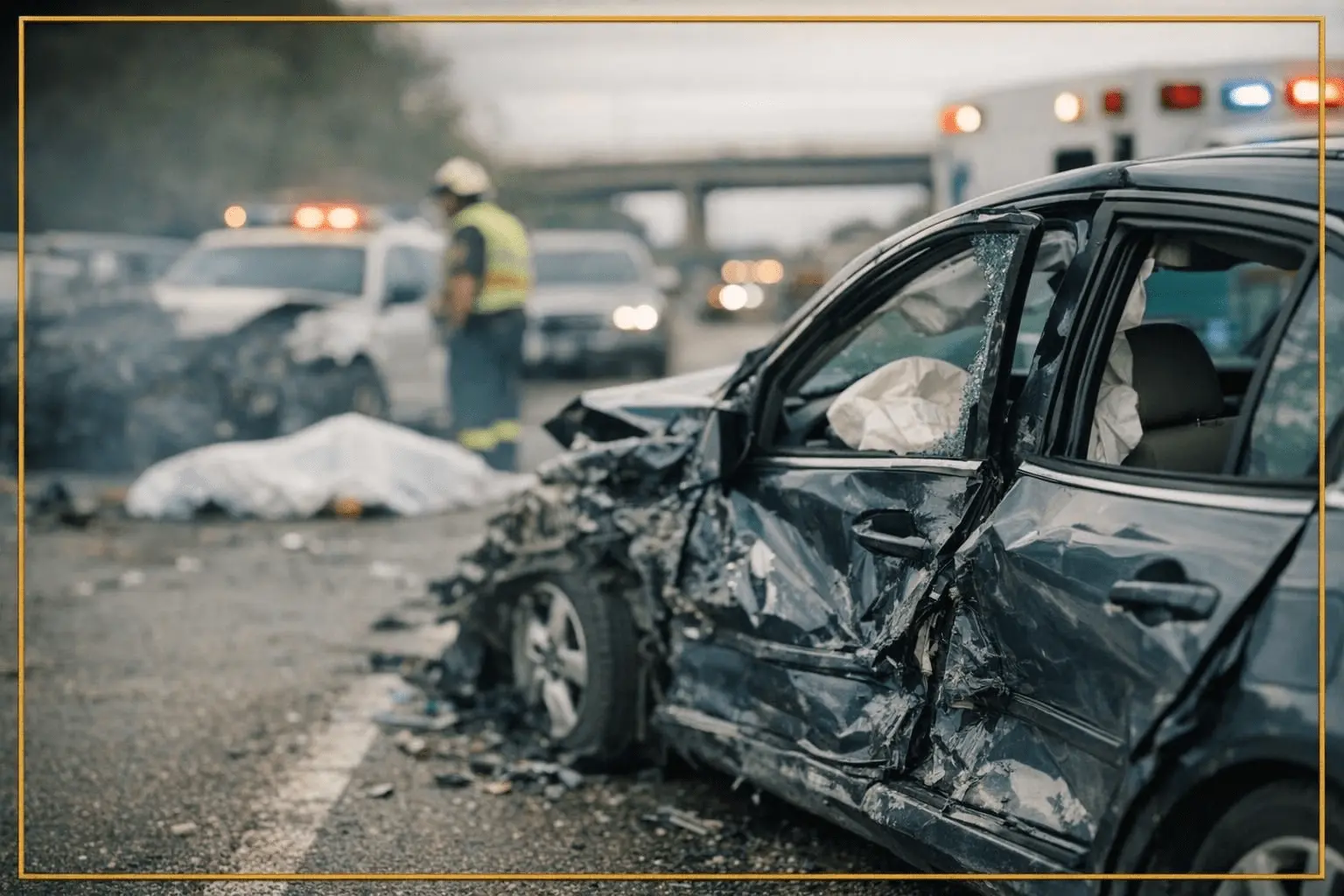
The sudden impact came without warning—no screeching brakes, no attempt to swerve, just the devastating collision that changed everything in an instant. If you’re reading this after being struck by a distracted driver in St. Louis, you’re likely facing mounting medical bills, painful injuries that keep you from work, and the frustration of knowing this crash never should have happened.
What Is a Distracted Driving Accident?
At OnderLaw, we understand the unique anger and helplessness that comes from being hurt by someone’s preventable choice, and we’re here to help you move forward with confidence and support. Because distracted driving cases require specialized evidence strategies beyond typical car accidents, from subpoenaing cell phone records to working with digital forensics experts who can prove what the other driver was doing at the moment of impact, you need attorneys who understand how to uncover device use even when drivers deny it.
The Scale of the Crisis
Our team has recovered over $5 billion in negotiated settlements for injured clients, and we’ve seen firsthand how distracted driving devastates Missouri families, with MoDOT data (2021) revealing over 200,000 distracted driving crashes and 801 fatalities across our state from 2012 to 2021 alone. These aren’t just statistics—they represent preventable tragedies caused by drivers who prioritized text messages over human lives.
Why Specialized Representation Matters
When Missouri strengthened its distracted driving laws with the Siddens-Bening Hands-Free Law in 2023, it sent a clear message that phone use behind the wheel is unacceptable, and because these cases often involve clear violations of state law and demonstrate willful negligence rather than simple mistakes, victims may be entitled to enhanced compensation that reflects the preventable nature of their injuries. Distracted driving cases demand attorneys who know how to uncover evidence that proves what drivers were doing instead of watching the road.
Understanding the True Scope of Distracted Driving in Missouri
At OnderLaw, we understand the unique anger and helplessness that comes from being hurt by someone’s preventable choice, and we’re here to help you move forward with confidence and support. Because distracted driving cases require specialized evidence strategies beyond typical car accidents, from subpoenaing cell phone records to working with digital forensics experts who can prove what the other driver was doing at the moment of impact, you need attorneys who understand how to uncover device use even when drivers deny it.
Official Statistics vs. Real Numbers
According to comprehensive MoDOT data (2021), our state experienced more than 200,000 distracted driving crashes between 2012 and 2021, resulting in 801 deaths and countless life-altering injuries that could have been prevented if drivers had simply put down their phones. These sobering statistics become even more alarming when telematics research from GHSA and MoDOT (2024) reveals that one in three crashes actually involves some form of distraction—far exceeding the 10-15% rate captured in official police reports, which suggests the crisis runs much deeper than traditional data indicates.
Why Underreporting Happens
The underreporting happens because drivers rarely admit to phone use after crashes, officers often can’t definitively prove distraction at chaotic accident scenes, and many forms of cognitive distraction leave no physical evidence to document. Without witnesses who specifically observed phone handling or immediate access to cell phone records, law enforcement must often code crashes as simple “failure to yield” or “following too closely” rather than distraction-related, and furthermore, many forms of cognitive distraction—daydreaming, emotional conversations, mental preoccupation—leave no physical evidence for investigators to discover.
National Context
National data from NHTSA (2022) recorded 3,308 distracted driving fatalities across America, demonstrating that Missouri’s crisis reflects a broader epidemic of preventable crashes caused by drivers who choose devices over safety. In the St. Louis metro area, where heavy traffic on I-270, Highway 40, and I-64 already creates hazardous conditions, distracted drivers transform routine commutes into potentially deadly encounters. For victims seeking justice after these preventable crashes, understanding the true prevalence of distracted driving strengthens their resolve to hold negligent drivers accountable, particularly when insurance companies try to minimize claims or suggest these accidents are unavoidable—the overwhelming statistical evidence proves otherwise.
Missouri Law on Distracted Driving and Hands-Free Requirements
The Siddens-Bening Hands-Free Law
Missouri took decisive action against distracted driving when Governor Parson signed the Siddens-Bening Hands-Free Law in June 2023, creating comprehensive statewide restrictions that went into effect on August 28, 2023. Under this law (RSMo §304.822), drivers cannot physically hold or support electronic devices, manually type or read text messages, record or broadcast video while driving, or watch videos unrelated to navigation, with violations carrying fines of $150 for first offenses, $250 for second offenses within 24 months, and $500 for subsequent violations.
The law does permit certain exceptions, including hands-free technology, single touches to activate features, GPS navigation use, and emergency calls to 911 or law enforcement. The statute includes a secondary enforcement provision stating that drivers cannot be stopped solely for device use, which means officers must observe another traffic violation (such as speeding or lane deviation) before initiating a stop; however, this limitation on stopping procedure doesn’t prevent violation evidence from strengthening civil injury claims when crashes occur, because the statutory language governs police stopping authority rather than the admissibility of device-use evidence in civil litigation.
Statutory Violations in Civil Cases
For accident victims, the most significant aspect involves how violations establish clear evidence of negligence in civil cases. When a driver violates Missouri’s hands-free law and causes a crash, they’ve breached their legal duty to operate vehicles safely, potentially triggering not just compensatory damages but enhanced liability for willful disregard of public safety. Compared to Illinois, which allows primary enforcement where officers can stop drivers solely for device use, Missouri’s approach focuses on education and compliance rather than aggressive enforcement; nevertheless, the law’s existence transforms how courts and juries view distracted driving cases, as violations now represent clear breaches of statutory safety standards rather than mere lapses in judgment.
Highest Degree of Care Standard
This legal framework provides powerful leverage for injury victims, particularly when combined with Missouri’s “highest degree of care” standard under RSMo §304.012 that requires all drivers to exercise maximum caution on public roads. Understanding what specific behaviors constitute distraction helps victims recognize when they have strong claims and strengthens the case for enhanced compensation when violations are proven.
Types of Distracted Driving That Cause Accidents
Distracted driving takes many forms, each compromising a driver’s ability to operate safely and react to hazards. This section categorizes the three main types of distraction—visual, manual, and cognitive—to help you understand how the driver who hit you may have been impaired, and why certain distractions prove particularly dangerous in establishing negligence.
Visual Distractions
Visual distractions can pull a driver’s eyes away from the road, creating blind spots that last several seconds—enough time to travel the length of a football field at highway speeds, during which the driver cannot see stopped traffic, pedestrians, or changing road conditions until it’s too late to react. Texting remains the most dangerous visual distraction because it requires drivers to read messages, type responses, and navigate phone screens while their vehicles hurtle forward uncontrolled. Beyond phones, drivers checking GPS navigation, looking at passengers, adjusting dashboard controls, or rubbernecking at roadside incidents all sacrifice critical visual attention that prevents them from seeing hazards in time to avoid crashes.
Manual Distractions
When drivers remove their hands from the wheel to hold phones, eat meals, drink beverages, or reach for fallen objects, they lose the physical control necessary for emergency maneuvers that could prevent or mitigate collisions. Manual distractions become particularly dangerous in St. Louis rush hour traffic on I-64, where sudden stops and lane changes demand immediate steering responses that one-handed or no-handed drivers simply cannot execute. Even seemingly innocent activities like adjusting radio stations, applying makeup, or handling items for passengers can transform routine drives into catastrophic crashes when unexpected hazards appear, because the split-second delay in regaining steering control often means the difference between a near-miss and a devastating impact.
Cognitive Distractions
Perhaps most insidious, cognitive distractions occur when drivers’ minds wander from driving tasks even while their eyes watch the road and hands grip the wheel, impairing reaction times and decision-making in ways that prove difficult to document but equally dangerous. Hands-free phone conversations, though legal under Missouri law, still impair reaction times and decision-making as drivers mentally engage with callers rather than traffic patterns, while emotional distress from arguments, work stress, or personal problems creates mental fog that delays hazard recognition. Daydreaming or highway hypnosis causes drivers to operate on autopilot, missing critical cues that would normally trigger defensive driving responses, which explains why some distracted drivers report never seeing the vehicle they struck despite looking in that direction.
Distracted driving takes many forms, each compromising a driver’s ability to operate safely and react to hazards. This section categorizes the three main types of distraction—visual, manual, and cognitive—to help you understand how the driver who hit you may have been impaired, and why certain distractions prove particularly dangerous in establishing negligence.
Common Injuries in Distracted Driving Accidents
Distracted driving crashes often produce more severe injuries than other accidents because distracted drivers typically fail to brake or take evasive action before impact, resulting in full-speed collisions that transfer maximum force to victims’ bodies. When a texting driver slams into stopped traffic on I-270 without slowing, or runs a red light while checking social media, the resulting high-energy impacts frequently cause traumatic brain injuries, spinal cord damage, and multiple fractures that require extensive surgical intervention and lengthy rehabilitation.
These catastrophic injuries stem directly from the physics of unmitigated crashes—while alert drivers typically brake and reduce impact speeds by 30-50%, distracted drivers deliver devastating blows at full velocity, which explains why injury severity in distraction cases often exceeds that of comparable accidents where drivers attempted to avoid collision. The injury patterns in distracted driving cases often include severe whiplash and neck injuries from rear-end collisions, internal organ damage from T-bone crashes at intersections, and complex orthopedic injuries from head-on collisions when distracted drivers drift across center lines.
Because these crashes happen without warning, victims cannot brace for impact or position themselves protectively, leading to more severe soft tissue damage and higher rates of permanent disability. The medical consequences extend beyond immediate trauma, as victims frequently develop chronic pain syndromes, post-traumatic stress disorder from the sudden violence of the crash, and long-term cognitive impairments from head injuries that may not fully manifest until months after the accident. For families facing these devastating injuries, the connection to distraction becomes crucial for securing adequate compensation, because insurance companies must understand that these aren’t ordinary accidents with typical injury patterns—they’re preventable catastrophes caused by conscious choices to prioritize phones over safety.
Proving Distracted Driving in Your Accident Case
Because distracted drivers rarely admit to phone use after causing crashes, building a compelling case requires strategic evidence collection that goes beyond typical accident documentation. This section outlines the specialized evidence sources and legal tools available to prove device use even when drivers deny it, and why immediate action to preserve evidence makes the difference between a strong claim and a weak one.
Cell Phone Records
Cell phone records obtained through subpoenas can reveal calls, texts, app usage, and data consumption timestamped to the exact moment of impact, providing irrefutable proof of device engagement even when drivers claim they never touched their phones. For instance, records showing active texting at the exact moment of the crash create compelling evidence that the driver’s attention was on their device rather than the road ahead. However, phone companies typically delete records after limited retention periods, which is why immediate legal action is critical to preserving this evidence before it disappears forever.
Event Data Recorders (Vehicle EDR)
Modern vehicles’ event data recorders capture crucial information about speed, braking, and steering inputs that, when combined with phone records, paint a clear picture of distraction. EDR data showing that a driver never attempted to brake despite approaching stopped traffic, combined with phone records showing active texting at that moment, creates compelling evidence that the driver’s attention was on their device rather than the road ahead. This technical evidence is difficult for insurance companies to challenge and carries significant weight with juries.
Surveillance Footage
Surveillance footage from traffic cameras, nearby businesses, or dashboard cameras increasingly captures drivers holding phones or looking down at devices immediately before crashes. This visual evidence provides powerful proof that doesn’t rely on witness credibility or technical analysis. Unfortunately, surveillance systems often overwrite footage within days, which is why immediate preservation efforts are essential to capturing this critical evidence before it disappears.
Witness Testimony
Witness testimony becomes particularly valuable when passengers in other vehicles, pedestrians, or following drivers observed the at-fault driver manipulating devices before the crash. These independent observations carry significant weight with juries, especially when multiple witnesses provide consistent accounts of seeing the driver using their phone. Witness memories fade quickly, however, which is why documenting witness information immediately after a crash is critical.
Social Media Evidence
Social media activity deserves special attention, as drivers sometimes post updates, photos, or livestreams while driving, creating timestamped evidence of their dangerous behavior that they cannot later deny. Screenshots and archived posts showing activity at the time of the crash provide irrefutable proof of distraction. Our team knows how to identify and preserve this digital evidence before accounts are deleted or posts are removed.
Digital Forensics Expertise
Working with an experienced car accident attorney ensures this critical evidence gets preserved before it disappears—cell phone records get deleted, surveillance footage gets overwritten within days, and witnesses’ memories fade quickly, which is why our team understands how to immediately send preservation letters, file emergency motions when necessary, and work with digital forensics experts who can extract deleted data and reconstruct device usage patterns. This comprehensive approach to evidence collection often reveals distraction even in cases where drivers adamantly deny any phone use, providing the proof necessary to secure full compensation for preventable injuries.
Because distracted drivers rarely admit to phone use after causing crashes, building a compelling case requires strategic evidence collection that goes beyond typical accident documentation. This section outlines the specialized evidence sources and legal tools available to prove device use even when drivers deny it, and why immediate action to preserve evidence makes the difference between a strong claim and a weak one.
Compensation in Distracted Driving Accident Cases
When drivers choose to violate Missouri’s hands-free law and cause crashes, their willful negligence often justifies compensation beyond typical accident settlements, reflecting both the preventable nature of these collisions and the conscious disregard for public safety. This section explains the types of damages available, how distraction affects valuation, and what enhanced liability may mean for your recovery.
Economic Damages
Economic damages in distracted driving cases frequently reach substantial amounts due to the severe injuries these high-speed, no-braking impacts cause—medical expenses for emergency treatment, surgeries, rehabilitation, and ongoing care can quickly exceed hundreds of thousands of dollars, while lost wages and diminished earning capacity create long-term financial devastation for families, and property damage claims must account not just for vehicle repairs or replacement but also for personal belongings destroyed in violent crashes that could have been avoided entirely.
Non-Economic Damages
Non-economic damages take on special significance in distracted driving cases because victims suffer not just physical pain but also the psychological trauma of knowing their injuries resulted from someone’s choice to text rather than drive safely, which Missouri law recognizes through pain and suffering awards, compensation for lost quality of life, and damages for the mental anguish of experiencing a preventable catastrophe.
Punitive Damages
In cases involving particularly egregious conduct—such as drivers livestreaming while driving or causing crashes while posting social media updates—Missouri courts may consider punitive damages under RSMo §510.265, which allows awards up to the greater of $500,000 or five times compensatory damages, except where the defendant’s conduct constituted a felony or in other statutorily defined exceptions. Insurance companies often fight harder against distracted driving claims because they recognize the potential for substantial verdicts when juries learn about deliberate phone use.
Comparative Fault Protection
Missouri’s pure comparative fault system ensures that even if victims share some responsibility for accidents, they may still recover damages reduced by their percentage of fault, and this framework, combined with clear evidence of hands-free law violations, creates powerful leverage for securing fair settlements that fully compensate victims for injuries that never should have occurred.
STATUTE OF LIMITATIONS
Missouri law provides a five-year statute of limitations for personal injury claims under RSMo §516.120, giving you more time than many states to pursue compensation; however, acting quickly preserves critical evidence that may disappear within days or weeks of the crash.
Cell phone companies delete records after limited retention periods, surveillance footage gets overwritten within days, and witness memories fade rapidly, which means the sooner you contact an attorney, the stronger your case becomes through preserved evidence and thorough investigation. While you have five years to file, waiting months or years to begin the legal process may significantly weaken your ability to prove distraction occurred.
Frequently Asked Questions
How do I prove the other driver was distracted?
Proving distraction requires strategic evidence collection including subpoenaing cell phone records that show calls, texts, or data usage at the time of impact, obtaining witness statements from anyone who saw the driver using devices, and securing traffic camera or surveillance footage from the accident scene. Event data recorders in vehicles can reveal lack of braking or evasive maneuvers typical of distracted driving, while social media timestamps sometimes show posts made while driving, and an experienced attorney can coordinate with digital forensics experts to extract and analyze this evidence, creating a comprehensive picture of distraction even when drivers deny phone use. Because phone companies delete records after limited retention periods and surveillance footage gets overwritten within days, immediate legal action to preserve evidence becomes critical to building a strong case.
What is Missouri's hands-free law?
The Siddens-Bening Hands-Free Law, effective August 28, 2023, prohibits Missouri drivers from physically holding or supporting electronic devices, manually typing or reading text messages, and recording or watching videos while driving. Although it’s a secondary enforcement law—meaning police cannot stop drivers solely for device use—violations carry fines of $150 for first offenses, $250 for second offenses, and $500 for subsequent violations within 24 months, and the law permits hands-free technology, single touches to activate features, GPS navigation, and emergency calls to 911 or law enforcement. The secondary enforcement provision limits when officers may initiate traffic stops but does not prevent device-use evidence from being admitted in civil injury claims when crashes occur.
Can I get compensation if the driver was texting?
Yes, texting while driving constitutes clear negligence under Missouri law and significantly strengthens your injury claim, as it demonstrates the driver consciously chose to violate safety laws and endanger others, which may justify enhanced compensation beyond typical accident damages. This willful negligence may justify enhanced compensation beyond typical accident damages, potentially including punitive damages in egregious cases, and evidence of texting provides powerful leverage in settlement negotiations, as insurance companies recognize that juries have little sympathy for drivers who cause crashes while texting, leading to higher verdicts at trial. The combination of statutory violation, clear breach of the duty of care, and preventable nature of the crash creates multiple grounds for substantial recovery.
How long do I have to file a distracted driving accident claim in Missouri?
Missouri law provides a five-year statute of limitations for personal injury claims (RSMo §516.120), giving you more time than many states to pursue compensation; however, acting quickly preserves critical evidence that may disappear within days or weeks of the crash. Cell phone companies delete records after limited retention periods, surveillance footage gets overwritten within days, and witness memories fade rapidly, which means the sooner you contact an attorney, the stronger your case becomes through preserved evidence and thorough investigation. While you have five years to file, waiting months or years to begin the legal process may significantly weaken your ability to prove distraction occurred.
What if the distracted driver denies using their phone?
Driver denials are common but rarely successful when faced with comprehensive evidence collection, as phone records obtained through subpoenas provide objective proof of device usage that contradicts false statements, and digital forensics experts can recover deleted texts, analyze app usage, and demonstrate phone activity even when drivers claim their phones were untouched. Additionally, witness testimony, surveillance footage, and vehicle data often reveal distraction patterns that expose these denials as desperate attempts to avoid responsibility, and in our experience, drivers who initially deny phone use often change their stories when confronted with irrefutable evidence from multiple sources. The key is acting quickly to preserve and collect this evidence before it disappears.
Are hands-free phone calls considered distracted driving?
While Missouri’s hands-free law permits voice-activated calling and hands-free technology, cognitive distraction from phone conversations still impairs driving ability and reaction times according to safety research, which means hands-free calling won’t result in traffic citations but may still support negligence claims if the conversation contributed to a crash through cognitive distraction. Expert testimony about attention impairment during phone conversations can strengthen injury claims, particularly when combined with evidence showing the driver was engaged in complex or emotional discussions while driving, because Missouri’s “highest degree of care” standard requires drivers to maintain full attention to the road regardless of whether their hands are on the wheel. The legal permissibility of hands-free calls doesn’t eliminate the duty to drive attentively.
LOCAL RESOURCES FOR [PRACTICE AREA] VICTIMS IN ST. LOUIS
St. Louis provides numerous resources for [practice area] victims, from world-class medical facilities to support organizations and government agencies. While this list isn’t exhaustive, these organizations provide valuable services throughout the St. Louis metropolitan area.
Hospitals
- Barnes-Jewish Hospital: (314) 747-3000 — Level I trauma center, comprehensive care
- SSM Health Saint Louis University Hospital: (314) 577-8000
- Mercy Hospital St. Louis: (314) 251-6000
Additional Medical Services
- Barnes-Jewish Hospital: (314) 747-3000 — Level I trauma center, comprehensive care
- SSM Health Saint Louis University Hospital: (314) 577-8000
- Mercy Hospital St. Louis: (314) 251-6000
Hotlines
- [Relevant support organization]: [Phone] — [Brief description]
- [Crisis hotline if applicable]: [Phone]
- [Support groups specific to practice area]
Support Groups
- [Relevant support organization]: [Phone] — [Brief description]
- [Crisis hotline if applicable]: [Phone]
- [Support groups specific to practice area]
Take Action After a Distracted Driving Accident
Time works against distracted driving victims as crucial evidence disappears daily—cell phone records get purged, surveillance systems overwrite footage, and witnesses become harder to locate as memories of specific details fade, while the insurance company for the distracted driver is already building their defense, looking for ways to minimize your claim or shift blame. You’re focused on recovering from injuries that never should have happened, dealing with medical appointments, missing work, and worrying about how you’ll pay mounting bills, but you don’t have to face this alone or wonder whether you’ll receive fair compensation for what you’ve been through.
Take Action Today to Protect Your Rights
By contacting OnderLaw immediately at 314-963-9000, you protect your rights and begin preserving evidence that proves what the other driver was really doing when they crashed into you. Our free consultation requires no upfront costs and no fees unless we secure compensation for your injuries, removing financial barriers that might prevent you from seeking justice after a preventable crash, and during this consultation, bring any documentation you have—police reports, medical records, photos from the scene, and witness contact information—though we can help obtain records you don’t yet have. Our 24/7 availability means you can reach us whenever you’re ready to discuss your case, whether that’s immediately after leaving the hospital or weeks later when the full impact of your injuries becomes clear.
Don’t let a distracted driver’s insurance company convince you these crashes are just accidents when they’re actually preventable tragedies caused by conscious choices to prioritize phones over safety. Contact OnderLaw today through our online form or by calling 314-963-9000 to schedule your free consultation and learn how we can help you secure the compensation and accountability you deserve after a distracted driving crash changed your life.
Tell Us About Your Case
Give us details on your product liability case
