
What to Do After a Bicycle Dooring Accident
If you’ve been struck by a suddenly opened car door while cycling in St. Louis, you’re facing more than just physical injuries. We understand the challenges these accidents create and are here to help.
OnderLaw Bicycle Accident Attorneys
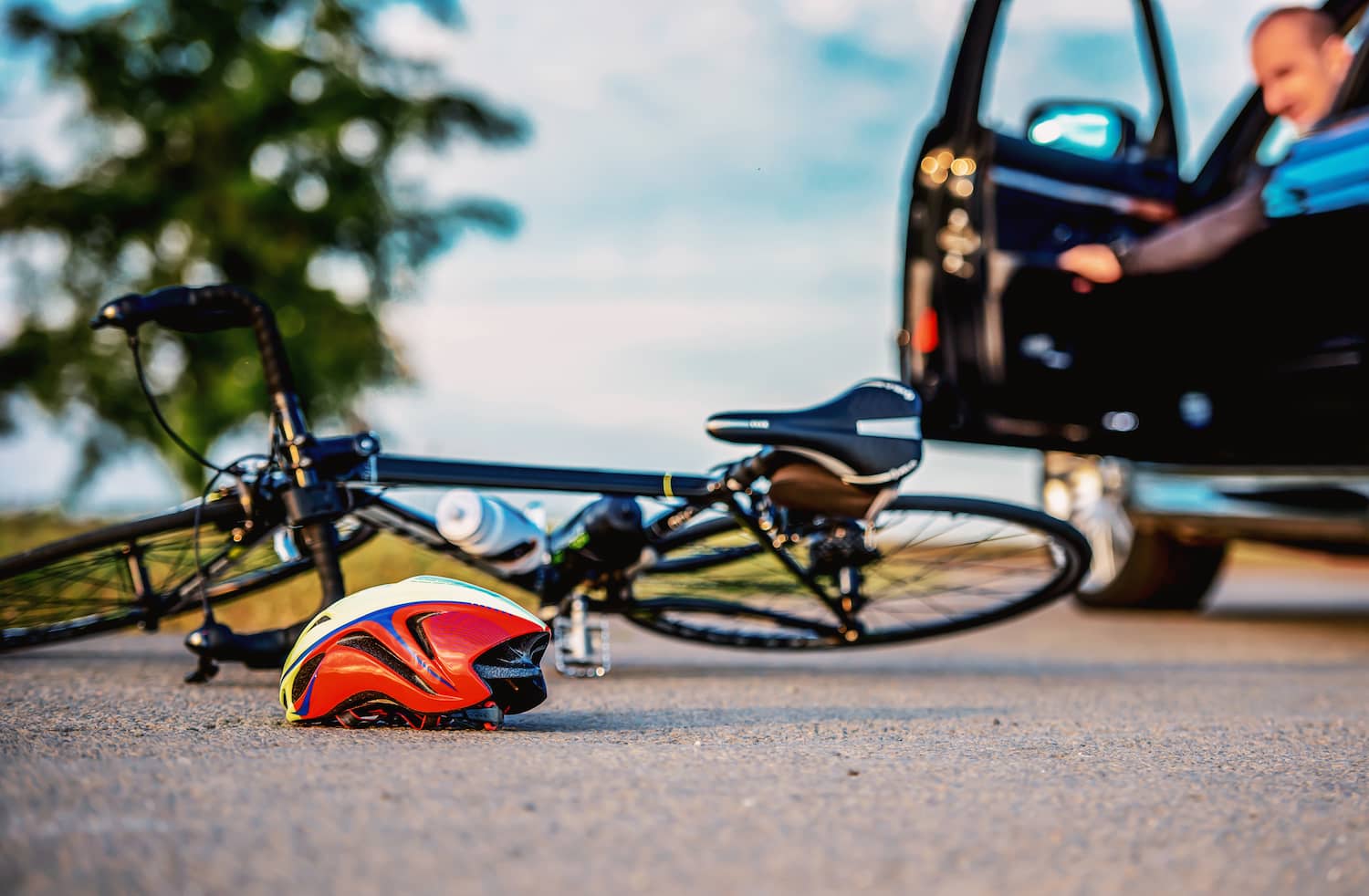
A dooring accident occurs when a driver or passenger opens their vehicle door into the path of an oncoming cyclist. These collisions happen suddenly, giving cyclists almost no time to react. Understanding these accidents and your legal rights is essential for recovery.
What Is a Dooring Accident?
A dooring accident occurs when a driver or passenger opens their vehicle door into the path of an oncoming cyclist. These collisions happen suddenly, giving cyclists almost no time to react. The impact can throw you from your bike, cause you to swerve into traffic, or result in serious injuries from striking the door itself. When a driver or passenger opens their door without checking for cyclists, they violate Missouri law and put lives at risk. The physics of these accidents makes them particularly severe—when a door opens into your path while you’re traveling at normal cycling speeds, the combined force of your forward momentum and the door’s solid edge creates a devastating impact.
Understanding the Door Zone
The “door zone” refers to the area immediately adjacent to parked cars where an opened door can strike a cyclist. This zone typically extends 3 to 5 feet from parked vehicles, depending on the vehicle size. Understanding this concept is crucial because many St. Louis bike lanes are partially or entirely within the door zone, creating an inherent safety conflict. Cyclists face an impossible choice: ride in the door zone and risk being struck, or move into traffic lanes where drivers may not expect them. This design flaw contributes to the frequency of dooring accidents in urban areas like the Central West End, downtown St. Louis, and the Delmar Loop, where parallel parking is common.
Missouri Law on Dooring Accidents
Missouri has specific statutes that establish clear duties for all vehicle occupants regarding door safety. Understanding these laws strengthens your case when seeking compensation.
Door Safety Statute
Missouri law specifically addresses dooring accidents through RSMo Section 300.340, which states: “No person shall open the door of a motor vehicle on the side available to moving traffic unless and until it is reasonably safe to do so, and can be done without interfering with the movement of other traffic, nor shall any person leave a door open on the side of a vehicle available to moving traffic for a period of time longer than necessary to load or unload passengers.” This statute creates a clear legal duty for all vehicle occupants, establishing that everyone has a responsibility to ensure safety before opening a door. When someone violates this law and causes injury, they may be held liable for damages. A violation of RSMo Section 300.340 is strong evidence of negligence per se if the plaintiff is in the class the statute protects and the harm is the kind the statute was intended to prevent.
Highest Degree of Care
Additionally, Missouri law requires motorists to exercise the “highest degree of care” when operating vehicles (RSMo Section 304.012), while cyclists owe ordinary care. This heightened duty for motorists strengthens your claim when a driver or passenger fails to check before opening their door. This disparity in legal standards recognizes the vulnerability of cyclists and places greater responsibility on vehicle operators to prevent accidents.
Liability and Negligence Per Se
When a driver or passenger violates RSMo Section 300.340 and this violation causes injury to a cyclist, the violation constitutes negligence per se. This means you don’t have to prove the driver was careless—the violation of the statute itself establishes negligence. This is a powerful tool in your case, as it shifts the burden and makes liability clear. The driver or passenger’s violation of the statute is direct evidence that they breached their legal duty of care.
Injuries Specific to Dooring Accidents
Bicycle accident dooring incidents cause distinct injury patterns. The sudden impact often throws cyclists over their handlebars or into the door itself, resulting in upper body trauma. Common injuries include shoulder dislocations, collarbone fractures, wrist and hand injuries, and facial trauma.
Secondary collisions pose additional dangers. After striking a door, cyclists may fall into traffic lanes where they can be struck by moving vehicles. These secondary impacts often cause the most severe injuries, including traumatic brain injuries, spinal cord damage, and internal organ injuries.
The combination of the initial impact and potential secondary collision makes dooring accidents among the most dangerous types of bicycle accidents. Even dooring accidents that seem minor at first can result in significant hidden injuries that develop over time.
PROVING FAULT IN DOORING ACCIDENTS
Establishing liability in dooring cases requires demonstrating that the door opener violated their duty of care. Multiple types of evidence can support your claim when seeking compensation.
Police Reports
Official documentation of the accident scene, statements, and any citations issued. A police report carries significant weight in your case, as it provides an objective account of the accident and may include officer findings about who violated traffic laws. If the officer cited the door opener for violating RSMo Section 300.340, this strengthens your negligence claim substantially.
Witness Testimony
Statements from people who saw the door open into your path. Eyewitness accounts are powerful evidence because they provide independent verification of how the accident occurred. Witnesses can describe whether the door opener looked before opening the door, whether you had the right of way, and the speed at which you were traveling. Obtaining witness contact information at the scene is critical.
Physical Evidence
Damage to your bicycle, the vehicle door, and photographs of the accident scene. The pattern of damage provides crucial information about the accident. Door dings and dents, along with matching damage to your bicycle, prove contact and support your account. Photographs taken immediately after the accident preserve evidence that may change or disappear over time. Document the accident scene, vehicle damage, bicycle damage, and your injuries.
Video Footage
Surveillance cameras or dashcam recordings that captured the incident. Video evidence is often the most conclusive proof of what happened. Nearby businesses, traffic cameras, or other vehicle dashcams may have recorded the accident. Surveillance footage eliminates dispute about the accident sequence and can clearly show whether the door opener looked before opening the door.
Traffic Patterns and Bike Lane Documentation
Documentation showing the door opened into an active traffic lane or bike lane. Evidence of bike lane markings, traffic volumes, and typical cyclist patterns at the accident location all support your claim. If the accident occurred in a designated bike lane, this significantly strengthens your position—it shows you were following traffic laws and using infrastructure provided for cyclists. The door opener’s violation becomes even clearer when they open a door into a marked bike lane.
Accident Reconstruction Expert Opinion
Professional analysis of the accident mechanics, vehicle positioning, and cyclist visibility. Accident reconstruction experts examine the physical evidence and provide scientific analysis about how the accident occurred. Their expert testimony can establish that the door opener should have been able to see an oncoming cyclist and that the violation of RSMo Section 300.340 was the direct cause of the accident.
Comparative Fault Analysis
Even in scenarios where cyclists might share some fault—such as riding at excessive speeds or failing to use lights at night—the door opener typically bears primary responsibility for violating RSMo Section 300.340. Missouri’s pure comparative fault system means you can recover even if partially at fault, though your compensation is reduced by your percentage of fault. The door opener’s violation is usually the dominant factor in dooring cases.
Establishing liability in dooring cases requires demonstrating that the door opener violated their duty of care. Multiple types of evidence can support your claim when seeking compensation.
COMPARATIVE FAULT & COMPENSATION
Comparative Fault in Dooring Cases
Missouri follows a pure comparative fault system, meaning you can recover damages even if you share some responsibility for the accident. Your compensation is simply reduced by your percentage of fault. For example, if you’re found 20% at fault and your damages total $100,000, you would receive $80,000.
Comparative fault in dooring accidents can involve multiple parties, each potentially sharing liability. The driver or passenger who opened the door typically bears primary responsibility, but other factors may contribute:
- Cyclist positioning: Riding too far into the door zone when safer alternatives existed.
- Speed: Traveling at speeds that made collision unavoidable even with proper door-opening procedures.
- Visibility: Failing to use required lights or reflective equipment at night.
- Traffic violations: Running stop signs or red lights immediately before the dooring incident.
Insurance companies often try to shift blame to cyclists to reduce their payout. Having an experienced bicycle accident attorney who understands Missouri’s comparative fault rules is essential to protecting your right to full compensation.
Compensation in Dooring Accident Cases
Victims of dooring accidents may be entitled to several types of compensation, depending on your case. Economic damages cover measurable financial losses like medical expenses, lost wages, and property damage to your bicycle and equipment. Non-economic damages compensate for pain and suffering, emotional distress, and loss of enjoyment of life.
In cases involving particularly reckless conduct—such as intentionally opening a door into a cyclist’s path or opening a door while severely intoxicated—punitive damages may be available. Missouri law caps punitive damages at the greater of $500,000 or five times your compensatory damages (RSMo Section 510.265).For comprehensive information about damages in serious injury cases, see our guide on wrongful death claims when dooring accidents result in fatal injuries.
TIME LIMITS FOR FILING YOUR CLAIM
Missouri law provides a 5-year statute of limitations for personal injury claims (RSMo Section 516.120). However, if your accident occurred in Illinois, that state’s 2-year statute of limitations applies (735 ILCS 5/13-202), making prompt action even more critical for cross-border cases where different deadlines may apply.
Claims against government entities require additional steps. Some charter cities require prompt written notice, often within 90 days under their charters or ordinances. Check the applicable municipal charter or code for exact notice deadlines. Missing these deadlines can permanently bar your claim, regardless of how strong your case may be.
Time is critical in dooring accident cases for more than legal reasons. Evidence disappears, witnesses’ memories fade, and insurance companies begin building their defense immediately. The sooner you contact an attorney, the better we can investigate your accident and preserve crucial evidence.
Frequently Asked Questions About Bicycle Dooring Accidents
Can I recover compensation if I wasn't wearing a helmet?
Yes. Missouri has no statewide helmet law for adult cyclists. Because there’s no universal helmet duty, lack of helmet use is not a statutory violation, but defense counsel may attempt to use it on causation or mitigation; admissibility is fact- and judge-specific. Your failure to wear a helmet does not prevent you from recovering damages for a dooring accident.
What if the person who opened the door was a passenger, not the driver?
Both drivers and passengers have a legal duty to check for traffic before opening doors. RSMo Section 300.340 applies to “any person,” not just drivers. You can pursue a claim against whoever opened the door, and potentially against the vehicle owner’s insurance policy.
How much is my dooring accident case worth?
Case value depends on multiple factors: the severity of your injuries, your medical expenses, lost income, permanent impairment, and the degree of fault assigned to each party. Cases involving serious injuries like fractures, head trauma, or injuries requiring surgery typically result in higher compensation. An experienced attorney can evaluate your specific circumstances and provide a realistic assessment.
What if I was riding in a bike lane when I was doored?
Riding in a designated bike lane strengthens your case significantly. It demonstrates you were following traffic laws and using the infrastructure provided for cyclists. The door opener’s violation becomes even clearer when they open a door into a marked bike lane.
Can I still recover if I share some fault for the accident?
Yes. Missouri’s pure comparative fault system allows you to recover damages even if you’re partially at fault. Your compensation is reduced by your percentage of fault, but you can still recover the remaining amount. Even if you’re found 40% responsible, you can still recover 60% of your damages.
Read More
Bicycle Dooring Accidents: What to Do When a Car Door Opens Into Your Path

Delivery Truck Accidents: Amazon, UPS, FedEx, and Commercial Carrier Crashes