You can speak with experienced attorneys who have secured over $7.5 billion in negotiated settlements for injured clients by calling 314-963-9000 for a free consultation with no fees unless we win your case. If you’ve witnessed or been injured in a jackknife truck accident, you know the terror of watching an 80,000-pound vehicle lose control. Our experienced attorneys have helped truck accident victims throughout St. Louis and Southern Illinois recover the compensation they deserve.
Understanding Jackknife Truck Accidents
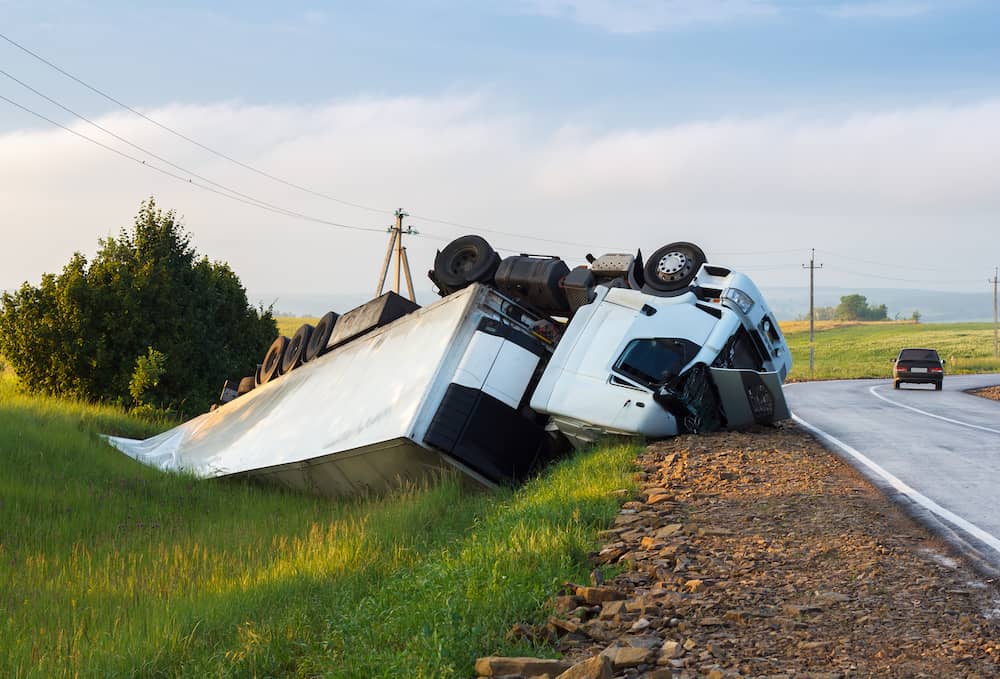
Jackknife accidents represent one of the most dangerous types of commercial vehicle crashes. When a truck’s trailer swings out to form a 90-degree angle with the cab, it creates a massive hazard that can sweep across entire highways. St. Louis’s busy interstates, challenging weather conditions, and heavy truck traffic make these accidents particularly common on routes like I-70, I-270, and the Poplar Street Bridge.
What Is a Jackknife Truck Accident?
A jackknife accident occurs when a truck’s trailer swings out of alignment with the cab, forming a V or L shape similar to a folding pocketknife. This happens when the trailer’s momentum carries it forward while the cab slows down or changes direction, causing the trailer to swing independently around the coupling point. The physics behind jackknifing involves a dangerous loss of synchronization between the tractor and trailer. When brakes lock up, road surfaces are slippery, or the driver makes sudden steering corrections, the trailer can lose traction and swing outward. Unlike other truck accidents where vehicles collide head-on or from behind, jackknifing creates a unique folding motion that can block multiple lanes instantly. These crashes happen in seconds, giving the truck driver virtually no time to regain control.
The Unique Dangers of Jackknife Accidents
Jackknife accidents create catastrophic scenarios that make them deadlier than many other types of truck crashes. When a trailer swings sideways, it can block an entire highway, leaving following vehicles with no escape route, and the 80,000-pound trailer becomes a moving wall that crushes smaller vehicles or forces them into guardrails and other traffic. These crashes frequently trigger chain-reaction collisions because vehicles behind the jackknifed truck cannot stop in time, especially in heavy traffic conditions common on I-270 and I-70. Cars swerving to avoid the trailer often collide with other vehicles or lose control themselves, and the initial jackknife can create dozens of secondary impacts within seconds. Fire and explosion risks increase significantly in these crashes. When fuel tanks rupture or hazardous cargo spills, the sideways trailer position can trap vehicles in the danger zone.
High-Risk St. Louis Locations
The Poplar Street Bridge and other Mississippi River crossings present especially dangerous conditions for jackknife accidents. These bridges offer limited escape routes—drivers cannot pull onto a shoulder or exit the roadway. The narrow lanes and high traffic volume on St. Louis bridges mean a jackknifing truck can trap dozens of vehicles with nowhere to go. As a result, victims of jackknife accidents often face more severe injuries and complex legal situations than those involved in other types of crashes. The I-270 corridor experiences frequent jackknife crashes due to its heavy truck traffic and numerous curves. The constant merging and lane changes as trucks navigate between I-70, I-44, and I-55 create scenarios where sudden braking becomes necessary.
Common Causes of Jackknife Accidents in St. Louis
Understanding the root causes of jackknife accidents helps establish liability in your case. Multiple factors often combine to create conditions where jackknifing becomes likely, and identifying which factors caused your accident is crucial to recovering full compensation.
Sudden or Improper Braking
Brake-related issues cause more jackknife accidents than any other factor. When a driver brakes too hard or suddenly, the truck’s wheels can lock up while the trailer continues moving forward, and this momentum difference causes the trailer to swing out beside the cab. Improperly adjusted brakes between the tractor and trailer worsen this problem—if the trailer brakes engage before or after the cab brakes, the vehicles move at different rates. According to FMCSA safety data, anti-lock braking systems have been required on trailers since 1998, but mechanical failures or poor maintenance can render these safety systems useless. When ABS fails, drivers lose the ability to modulate braking force, increasing jackknife risk dramatically.
Slippery Road Conditions
St. Louis weather creates year-round traction challenges for truck drivers. Winter ice and snow reduce tire grip, making trailers more likely to slide sideways during braking or turning, while rain creates hydroplaning conditions where trailers lose contact with the road surface entirely. Even morning dew or Mississippi River mist on bridge surfaces can create enough slickness to trigger a jackknife. The physics of reduced traction affect heavy trucks differently than passenger vehicles. When a trailer’s tires lose grip, its massive weight and momentum continue in the original direction while the cab changes course, and this separation of movement creates the classic jackknife formation.
Excessive Speed for Conditions
Speed limits on Missouri highways are designed primarily for passenger vehicles, not 80,000-pound trucks. When truck drivers maintain highway speeds in rain, snow, or heavy traffic, they cannot slow down quickly enough to avoid jackknifing because the momentum of a fully loaded trailer traveling at 65 mph requires significantly more stopping distance than the cab alone. Curves and exit ramps on I-270 and I-70 pose particular speed-related jackknife risks. When trucks enter these sections too fast, the trailer wants to continue straight while the cab turns, creating the folding motion that defines a jackknife accident. Driver fatigue often compounds speed-related errors, as exhausted drivers fail to recognize dangerous conditions in time to adjust their speed appropriately.
Improper Cargo Loading and Weight Distribution
Unbalanced loads shift a trailer’s center of gravity, making it more prone to swinging during normal driving maneuvers. Top-heavy loads increase rollover risk, which often begins with a jackknife motion, and when cargo isn’t properly secured, it can shift during braking, suddenly changing the trailer’s weight distribution and triggering a loss of control. Federal regulations under 49 C.F.R. §387.9 establish weight limits specifically to prevent these stability issues. Overweight trailers require longer stopping distances and put excessive strain on braking systems. When trucking companies or cargo loaders violate these safety standards, they create conditions where jackknifing becomes almost inevitable during emergency maneuvers.
Equipment Failures
Mechanical failures in critical systems frequently cause jackknife accidents. Worn brake pads reduce stopping power unevenly between the tractor and trailer, while tire blowouts, especially on trailer wheels, cause sudden directional changes that can initiate jackknifing. Defective trailer couplings or fifth wheel assemblies allow excessive movement between the cab and trailer. Regular maintenance could prevent most equipment-related jackknife accidents because federal regulations require systematic inspection and maintenance of all safety-critical components. Yet many trucking companies cut corners to save money or keep trucks on the road longer. These maintenance failures often become key evidence in establishing liability for your injuries.
Proving Liability in Jackknife Accident Cases
Establishing who caused your jackknife accident is essential to recovering full compensation. Multiple parties may share responsibility, and understanding Missouri law on commercial vehicle liability helps you pursue every available remedy.
Driver Negligence in Jackknife Crashes
Truck drivers who cause jackknife accidents through negligent behavior can be held liable for resulting damages. Speeding for conditions, improper braking techniques, and failure to adjust for weather all constitute negligence. Under Missouri law (RSMo §304.012), commercial drivers must exercise the “highest degree of care”—a stricter standard than applies to regular motorists. Driver fatigue affects reaction time and judgment, making jackknife accidents more likely. When drivers violate hours-of-service regulations or falsify logbooks to drive longer than legally permitted, this negligence becomes clear evidence of liability. The recent handheld device ban under Missouri law (RSMo §304.822), effective August 28, 2023, means distracted driving now carries even stronger liability implications.
Trucking Company Liability
Trucking companies bear responsibility for jackknife accidents in multiple ways. They may face direct liability for negligent hiring, training, or supervision of drivers, and companies that fail to provide adequate training on jackknife prevention or hire drivers with poor safety records share blame for resulting crashes. Maintenance negligence represents another avenue of trucking company liability. When companies skip required brake inspections, ignore worn tires, or delay critical repairs to keep trucks profitable, they create dangerous conditions. Federal regulations require specific maintenance schedules and documentation—violations provide strong evidence of negligence. Vicarious liability means trucking companies are responsible for their drivers’ negligent acts performed within the scope of employment. Even when the driver makes the error causing a jackknife, the company that profits from that driver’s work shares legal responsibility for damages.
Maintenance Provider Responsibility
Third-party maintenance providers who service commercial trucks may bear liability for jackknife accidents caused by their negligence. Improper brake adjustments, failure to identify worn components, or incorrect tire installation can all contribute to jackknifing, and these companies have a duty to perform competent maintenance according to federal standards.
Cargo Loading Company Liability
Companies responsible for loading cargo must follow federal weight distribution and securement rules. Improper loading that creates an unbalanced or overweight trailer directly contributes to jackknife risk. When loading companies violate safety regulations to fit more cargo or save time, they share liability for resulting accidents. Building a strong case often requires identifying all potentially liable parties to maximize your recovery.
How Jackknife Accidents Differ from Other Truck Crashes
Understanding how jackknife accidents differ from other commercial vehicle crashes is important for establishing liability and identifying the specific causes of your incident.
Jackknife vs. Rollover
Jackknife accidents involve distinct mechanics that set them apart from other commercial vehicle crashes. While rollover accidents involve the entire truck tipping over, jackknifing specifically refers to the trailer swinging out of alignment while both vehicles typically remain upright—at least initially. A jackknife can lead to a rollover, but they represent different crash events with different causes.
Jackknife vs. Underride
Underride accidents occur when smaller vehicles slide beneath a truck’s trailer, while jackknife crashes involve the trailer swinging sideways to create a barrier across traffic lanes. The impact patterns differ significantly—underride crashes typically involve rear or side impacts at a specific point, but jackknife accidents create a sweeping danger zone across multiple lanes.
Jackknife vs. Rear-End Collisions
Rear-end truck collisions involve straightforward forward impacts, but jackknife accidents create complex, multi-directional crash scenarios. The trailer’s sideways motion means vehicles can strike it from multiple angles simultaneously, and this complexity affects how investigators reconstruct the crash and determine liability. These unique characteristics often require specialized legal expertise to properly evaluate and pursue your claim.
Critical Evidence in Jackknife Accident Cases
Building a strong jackknife accident case requires specific types of evidence that prove how and why the crash occurred.
Electronic Control Module (ECM) Data: The truck’s “black box” records crucial information including speed, braking patterns, and whether anti-lock braking systems engaged. This data often reveals whether the driver was speeding or braked improperly before the jackknife.
Brake Inspection and Maintenance Records: Federal regulations require detailed documentation of all brake work, adjustments, and replacements. Missing or falsified records suggest negligence, while records showing delayed maintenance strengthen liability claims.
Weight Tickets and Cargo Manifests: These documents demonstrate whether the trailer was properly loaded within legal limits. They reveal weight distribution problems or overloading that contributed to the jackknife.
Driver Logs and Training Records: These show whether the driver had adequate rest and preparation for safely operating the vehicle.
Physical Evidence from the Accident Scene: Skid marks indicate braking patterns and where the trailer began sliding, while the final resting positions of vehicles, debris patterns, and impact damage help accident reconstructionists determine the sequence of events. Weather data from the time of the crash proves whether conditions required reduced speed or extra caution. Preserving this evidence quickly becomes crucial to your case’s success.
Injuries Commonly Seen in Jackknife Accidents
The devastating force of jackknife accidents causes severe, life-altering injuries that justify substantial compensation:
- Traumatic Brain Injuries: Occur frequently when vehicles strike the sideways trailer or experience secondary rollovers, and these injuries may cause permanent cognitive impairment, personality changes, and lifelong medical needs.
- Spinal Cord Damage: From the crushing force of an 80,000-pound trailer can result in partial or complete paralysis. Victims may lose sensation and function below the injury site, requiring extensive medical care, rehabilitation, and adaptive equipment for the rest of their lives.
- Multiple Fractures: Throughout the body are common, particularly in the legs, arms, and ribs where the vehicle structure collapses under impact.
- Internal Injuries: Pose immediate life-threatening risks and long-term complications. Organ damage, internal bleeding, and punctured lungs require emergency surgery and extended recovery periods.
- Burn Injuries: Occur when fuel tanks rupture or cargo ignites, causing severe pain and permanent scarring.
The sideways impact characteristic of jackknife accidents creates unique injury patterns. Unlike head-on collisions where airbags and crumple zones provide some protection, side impacts offer less structural protection. The massive weight difference between commercial trucks and passenger vehicles means occupants of smaller vehicles bear the brunt of impact forces. These severe injuries often justify substantial compensation claims.
Preventing Jackknife Accidents: Industry Standards and Failures
Federal safety standards exist specifically to prevent jackknife accidents, yet violations remain common. Understanding industry standards helps prove negligence when trucking companies fail to meet these requirements.
Anti-Lock Braking Systems (ABS)
According to FMCSA regulations, anti-lock braking systems have been required on all trailers since 1998, preventing wheel lockup that triggers jackknifing. Electronic stability control represents newer technology that actively prevents trailer swing, though it’s not yet universally required.
Driver Training Requirements
Driver training should include specific jackknife prevention techniques: gradual braking, speed management for conditions, and proper load distribution awareness. When trucking companies skip this training to get drivers on the road faster, they violate industry standards and increase accident risk.
Maintenance and Inspection Schedules
Regular maintenance schedules mandated by federal law help prevent equipment failures that cause jackknifing. Brake adjustments, tire inspections, and coupling checks must occur at specified intervals with detailed documentation. When companies extend maintenance intervals to save money, they knowingly accept increased jackknife risk.
Cargo Loading and Securement Standards
Load securement rules under federal regulations specify how cargo must be distributed and secured to prevent shifting that triggers jackknifing. Weight must be balanced properly between axles, and cargo must be prevented from moving during transport. Violations of these standards establish clear negligence when jackknife accidents occur, strengthening your legal claim.
Compensation and Statute of Limitations
Victims of jackknife accidents can recover multiple types of compensation from negligent drivers, trucking companies, and other responsible parties.
Types of Compensation Available:
- Economic Damages: Cover all financial losses directly caused by your injuries, including medical expenses (emergency care, surgeries, rehabilitation, ongoing treatment), lost wages and earning capacity, property damage to your vehicle, and costs for home modification or adaptive equipment if you suffer permanent disability.
- Non-Economic Damages: Compensate you for harm that doesn’t have a fixed dollar value, including pain and suffering from your injuries, emotional trauma and psychological distress, loss of enjoyment of life, and permanent disfigurement or scarring.
- Punitive Damages: In cases where the defendant’s conduct was willful, wanton, or grossly negligent, Missouri law permits punitive damages to punish especially egregious behavior. Trucking companies that knowingly maintain unsafe trucks or hire unsafe drivers may face punitive damages. Under RSMo Section 510.265, punitive damages are capped at the greater of actual damages or $5,000.
| Jurisdiction | Time Limit | Statute | Notes |
|---|---|---|---|
| Missouri | 5 years | RSMo §516.120 | Personal injury claims |
| Illinois | 2 years | 735 ILCS 5/13-202 | Personal injury claims |
However, you should contact an attorney immediately to preserve crucial evidence because federal regulations only require trucking companies to maintain driver logs for six months, and physical evidence like skid marks deteriorates quickly. Different deadlines may apply for wrongful death cases or claims against government entities.
Frequently Asked Questions About Jackknife Accidents
What is the difference between a jackknife accident and a rollover accident?
A jackknife accident occurs when a truck’s trailer swings out to the side, forming a V or L shape with the cab, while a rollover involves the entire truck tipping onto its side or roof. Jackknifing often happens due to brake lockup or loss of traction, while rollovers typically result from excessive speed on curves or top-heavy loads. Although a jackknife can lead to a rollover, they are distinct events with different causes and dynamics.
How long do I have to file a jackknife accident lawsuit in Missouri?
Under Missouri law (RSMo §516.120), you have five years from the accident date to file a personal injury lawsuit for a jackknife truck accident. However, you should contact an attorney immediately to preserve crucial evidence because federal regulations only require trucking companies to maintain driver logs for six months, and physical evidence like skid marks deteriorates quickly. Different deadlines may apply for wrongful death cases or claims against government entities.
Can weather conditions be used as a defense in jackknife accident cases?
While trucking companies often blame weather for jackknife accidents, Missouri law requires truck drivers to adjust their speed and driving for conditions. If a driver was traveling too fast for icy or wet roads, failed to use proper braking techniques, or lacked adequate training for winter driving, they may still be liable despite weather conditions. Commercial drivers must exercise the highest degree of care regardless of weather challenges.
What role do brake systems play in jackknife accidents?
Brake system failures are a leading cause of jackknife accidents. When brakes lock up unevenly between the tractor and trailer, or when anti-lock braking systems malfunction, the trailer can swing out of control. Trucking companies must maintain brake systems according to federal standards and ensure ABS is functioning properly. Brake inspection records and maintenance logs provide critical evidence in jackknife accident cases.
Are jackknife accidents more common on certain St. Louis highways?
Yes, jackknife accidents occur more frequently on St. Louis highways with heavy truck traffic, challenging weather conditions, and complex interchanges. The Poplar Street Bridge, I-270 corridor, and I-70 through downtown St. Louis see higher rates of jackknife crashes due to narrow lanes, frequent congestion, and exposure to Mississippi River weather conditions. Winter ice and summer rainstorms create particularly dangerous conditions on these routes for large trucks.
How is liability determined when multiple vehicles are involved in a jackknife accident?
In multi-vehicle jackknife accidents, liability is determined by analyzing each driver’s actions and the truck driver’s negligence. Missouri’s pure comparative fault system allows recovery even if you share some responsibility, with damages reduced proportionally. Investigators examine the sequence of events, the truck’s jackknife motion, and whether other drivers had reasonable opportunity to avoid the collision.
What evidence is most important in proving a jackknife accident case?
The most critical evidence in jackknife accident cases includes the truck’s Electronic Control Module data showing speed and braking, brake inspection and maintenance records, trailer coupling inspection reports, cargo weight tickets, driver logs, and accident scene documentation. This evidence must be preserved quickly through formal legal demands, as trucking companies are only required to maintain some records for six months.
Can I recover compensation if the jackknife accident occurred during bad weather?
Yes, you can still recover compensation for a jackknife accident that occurred during bad weather. Truck drivers have a legal duty to adjust their driving for weather conditions, including reducing speed, increasing following distance, and using proper braking techniques. If the driver failed to exercise reasonable care for the conditions, or if inadequate maintenance contributed to the jackknife, liability may still exist despite weather challenges.
Contact OnderLaw for Your Jackknife Accident Case
Time is critical after a jackknife accident. Evidence disappears quickly—skid marks fade, witnesses become harder to locate, and trucking companies are only required to preserve certain records for limited periods. The sooner you contact an attorney, the stronger your case becomes. At OnderLaw, we understand the devastating impact jackknife accidents have on victims and families. Medical bills pile up while you’re unable to work, and insurance companies pressure you to accept inadequate settlements. You need experienced legal representation that understands the technical complexity of jackknife cases and has the resources to fight trucking companies and their insurers. We work on a contingency fee basis—you pay nothing unless we win your case.
✓ No Fee Unless We Win ✓ Available 24/7✓ $5B+ Recovered