Common Examples for Injury Claims of Premises Liability Cases
Premises liability claims can come from different situations. Some involve injuries from unsafe surfaces,
Liability of Property Owners
When talking about premises liability, it matters how much control property owners have, what care they owe to visitors, and how well the property is maintained. Our legal rights and duties depend on the status of the visitor and the owner’s actions.
Duty of Care Owed to Visitors
We know that property owners have a legal duty of care to most people who enter their land. The exact duty depends on if the person is a guest, customer, or trespasser.
Owners must keep their property reasonably safe for people who have permission to be there. For invitees and licensees, that means fixing dangers, warning about hazards, or blocking off risky areas.
If it’s a business, there is a higher standard of care. For example, a store must check floors for spills and repair broken steps. In many states, these liability rules follow premises liability laws that set specific standards for owners.
Property Owner Failed to Maintain Safety
When a property owner fails to maintain safety, they can be held responsible for injuries that happen because of unsafe conditions. Common failures include broken railings, loose floor tiles, or poor lighting in stairwells.
To prove liability, we need to show the owner knew or should have known about the danger and did not fix it. If someone else has control, like a tenant, the landlord might still be responsible in some situations, such as those covered by implied warranty rules.
Owners are not automatically liable for every injury. They are responsible when they neglect repairs or ignore safety complaints. Photos, witness reports, and maintenance records can help prove the owner failed in their duty.
Accidents on Else’s Property
Premises liability covers accidents that happen on property owned or controlled by someone else. These cases include slip-and-fall incidents, injuries from falling objects, or harm caused by crime on the premises.
We often help clients who are hurt at stores, apartment complexes, or parking lots. Key questions are whether the owner controlled the property and if there was neglect.
Legal claims may focus on who was supposed to make repairs or provide security. Some cases involve criminal acts, and courts may hold owners accountable if they failed to take basic safety steps. Property owners can be found liable when they failed to prevent foreseeable harm to visitors.
High-Risk Locations for Premises Liability Claims
Certain locations face higher chances of premises liability claims because hazards are more common and accidents can easily happen. Our clients often ask about these locations because both business owners and visitors want to know the risks.
Grocery Stores and Retail Property
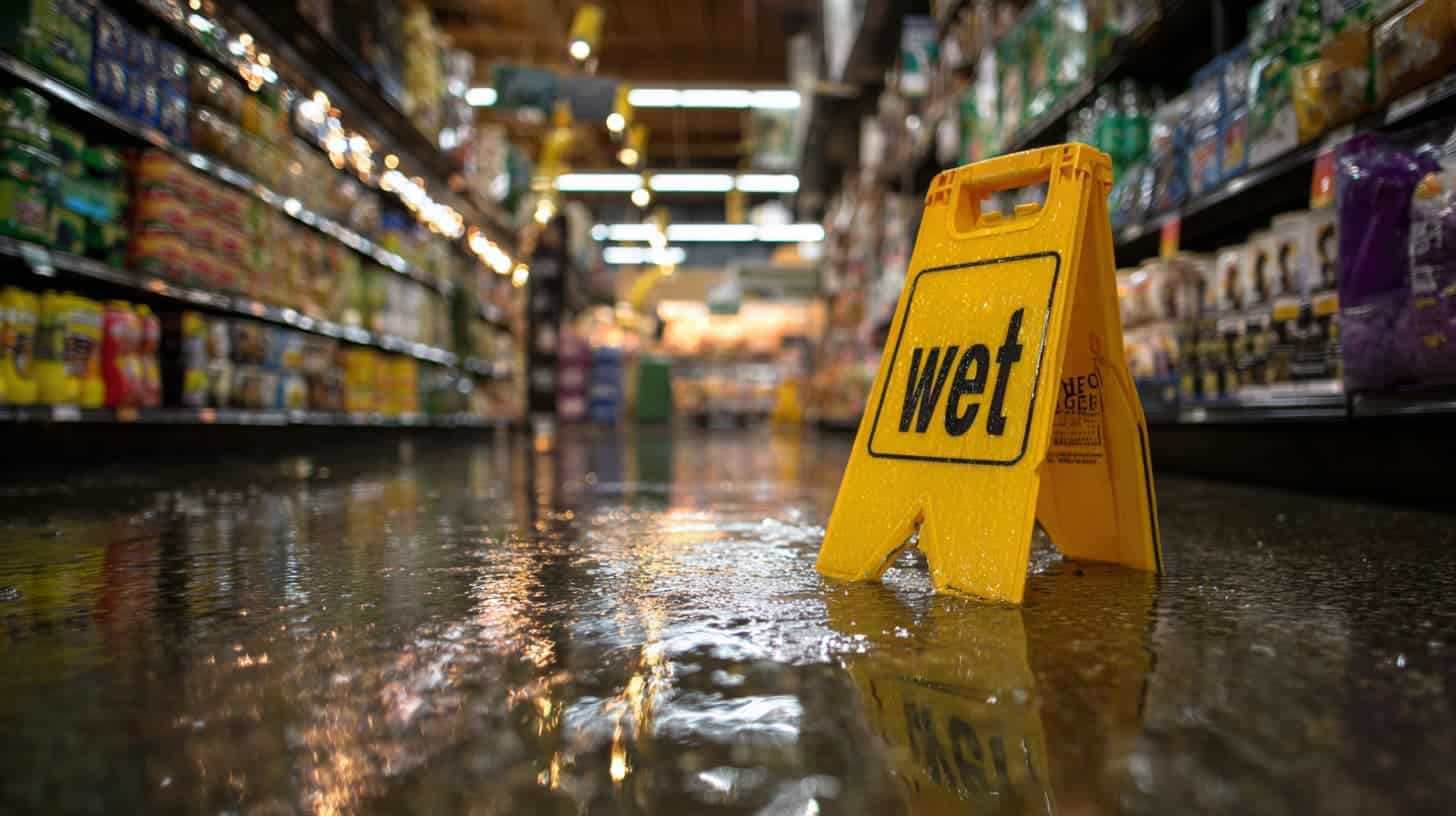
Grocery stores and retail properties are major high-risk spots for premises liability claims. These places see heavy foot traffic every day, so the chance of spills, clutter, or other hazards goes up. A common example is slipping on a wet floor caused by spilled items or routine cleaning.
Store owners must regularly inspect aisles, restrooms, and entrances to check for safety issues. If we see poor maintenance—like broken shopping carts or blocked emergency exits—it can lead directly to a premises liability case. It’s also important to keep walkways free from trip hazards such as rolled-up rugs or stacked boxes.
Retail properties may also have security risks. If there is inadequate lighting or a lack of cameras in high-traffic areas, attacks or thefts can occur. When property managers ignore these problems, claims for injuries or emotional distress may arise. For more details on these risks, we recommend looking at this analysis of insurance claims in the industry.
Parking Lots and Garages
Parking lots and garages are another prime area for premises liability claims. Slips, trips, and falls can result from cracked pavement, poor lighting, or ice during cold weather. We must also consider the risk of car accidents and pedestrian injuries in these crowded spaces.
Negligent security is a major concern. When owners provide little security patrol or insufficient cameras, violent crimes or vehicle break-ins become more likely. Victims often file premises liability cases if injuries or losses occur because of these failures.
Cleanliness and regular checks are key to preventing accidents or crimes in parking lots and garages. If we own or manage a property, we need to fix broken lights, repaint faded lines, and respond quickly to hazards. Exploring relationships between violent crime and premises security litigation shows how ignored problems often lead to expensive legal claims.
Handling a Premises Liability Personal Injury Case
When we help a client with a premises liability claim, our main focus is proving the property owner’s responsibility and showing how their actions or inactions led to injury. Clear evidence and a step-by-step process are key to reaching a fair outcome.
Navigating Premise Liability Accidents
We start by carefully examining the details of the premises liability accident. Our team identifies what hazard or unsafe condition caused the personal injury case. This might include wet floors, broken stairs, poor lighting, or lack of security.
Next, we check who owns or controls the property, since this person or business is usually responsible. We also find and record any warning signs or barriers that should have been in place. This helps us show whether the property owner took reasonable steps to keep people safe.
We often use photos, medical records, and witness statements to build a strong premises liability claim. Acting fast to gather this evidence makes it easier to link the accident directly to dangerous conditions on the property.
Proving a Premises Liability Case
To prove a premises liability case, we must show several key elements:
- The property owner had a duty to keep the area safe.
- They failed in that duty by not fixing or warning about a hazard.
- Our client was hurt because of this failure.
We organize facts and supporting evidence to match these elements. For example, if an injury happened at a store, we may use past complaints, repair logs, or video footage to show neglect. We also rely on expert opinions in more complex cases, such as when building codes are involved.
By clearly showing how each fact supports our claim, we put our clients in the best possible position for a successful result. Courts pay close attention to the proof we provide, so thoroughness and clarity matter at every step. For additional insights, there’s an in-depth guide on premises security litigation that can help explain what to expect.
Legal Support for Premises Liability Victims
Legal help is crucial for victims facing complex premises liability cases. The right team can guide us through claim processes, protect our rights, and improve the chance of a fair result.
Premises Liability Attorneys and Legal Guidance
Premises liability attorneys focus on representing those who have been hurt because of unsafe property conditions. They know how to collect evidence, talk to witnesses, and work with insurance companies. By working with specialized lawyers, we can make sure every important fact is considered.
Often, skilled attorneys help us prove fault, show the extent of our injuries, and demonstrate how the property owner failed their duty. Good legal guidance also means we understand all possible damages, including medical bills and lost wages. For more on how legal professionals manage these cases, refer to this complete guide to premises security litigation.
Here are key ways premises liability attorneys support us:
- Reviewing property maintenance records
- Reconstructing the accident
- Explaining our legal rights in simple terms
- Negotiating fair settlements
When to Contact an Experienced Premises Liability Lawyer
We should contact an experienced premises liability lawyer as soon as possible after an injury. Early legal support helps us avoid mistakes that can harm our case, such as missing deadlines or giving statements that insurance companies could use against us.
It is important to get help if we face unclear property ownership, unsafe building conditions, or severe injuries. Lawyers can deal with difficult situations when the property owner claims the danger was obvious or blames us for the accident.
Contacting an attorney ensures that evidence, like photos or security footage, is preserved right away. Premises liability law can be confusing, but experienced lawyers provide clear guidance at each step. This helps us focus on recovery instead of dealing with legal stress.
Frequently Asked Questions
We often get questions about different situations that may lead to a premises liability case. Knowing the common types of accidents, how property owner duties are set, and what evidence to gather helps victims protect their rights.
What Constitutes a Slip and Fall Accident for Premises Liability Claims?
A slip and fall usually happens when someone trips or slips due to a dangerous condition like wet floors, uneven surfaces, torn carpets, or poor lighting. To make a claim, we must show the property owner either knew or should have known about the hazard and failed to fix it.
How Are Settlement Amounts Determined in Premises Liability Cases?
Settlement amounts depend on the type and seriousness of our injuries, medical expenses, lost income, and pain and suffering. The details of the accident and the level of the property owner's negligence also affect how much compensation we might receive.
What Legal Duties do Property Owners Have Under Premises Liability Laws?
Property owners must keep their property reasonably safe for visitors. This means regularly checking for hazards, repairing dangers, and warning visitors when risks cannot be fixed right away. Businesses may have even stronger duties to protect people from harm, including criminal acts, as discussed in this review of premises liability.
What Elements Must Be Proven in Negligent Security Premises Liability Lawsuits?
In negligent security cases, we need to prove the property owner failed to provide proper safety measures, and as a result, a foreseeable crime happened that caused injury. We also need to show a direct link between the lack of security and our harm, as looked at in premises security lawsuits.
How Does Visitor Status Affect a Premises Liability Claim?
Our status—as a customer, guest, or trespasser—matters because property owners owe different duties depending on why we are on the property. For example, customers in a business usually get more legal protection and care than someone trespassing.
What Key Evidence Supports a Claim in Premises Liability Litigation?
Photos of the scene, accident reports, witness statements, medical records, and documentation of our injuries are all important. Evidence that shows the dangerous condition existed and that the owner had enough time to fix it strengthens our claim. Keeping records makes it easier for us to show what happened and prove responsibility.